
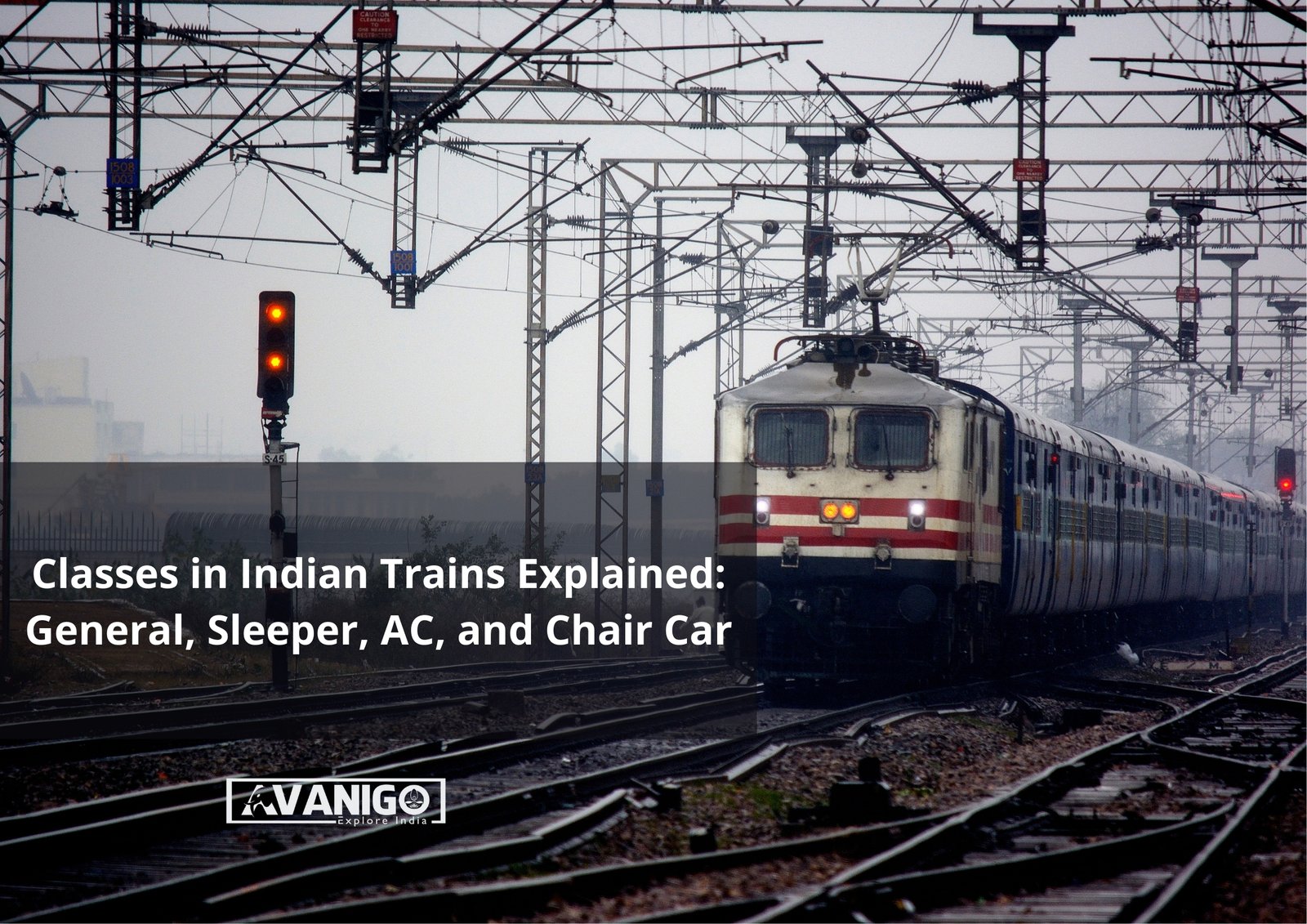
 Indian Railways operates one of the largest passenger railway systems in the world. Every day, people from different income groups, professions, and regions travel by train. To serve such a large and diverse population, Indian Railways offers different classes of travel.
In Indian trains, each class is designed to meet different needs. Some focus on affordability, while others focus on comfort and speed. Understanding these classes helps passengers choose the right option for their journey. This article explains the main passenger classes in Indian trains in simple words.
Quick Navigation
Why Indian Trains Have Different Classes
India is a large country with people from many economic backgrounds. Some passengers travel short distances daily for work, while others travel long distances for education, jobs, or family visits.
Indian Railways provides different classes so that:
- Travel remains affordable for everyone
- Passengers can choose comfort based on budget
- Long-distance and short-distance needs are met
This system ensures that rail travel remains inclusive and accessible.
General Class (Second Class Unreserved)
What Is General Class?
General Class is the lowest-cost travel class in Indian trains. Tickets for this class are unreserved, which means seats are not fixed.
Key Features
- Cheapest ticket price
- No reserved seats or berths
- Often very crowded
- Wooden or simple seating in many trains
Who Uses It?
- Daily commuters
- Short-distance travelers
- Passengers with limited budgets
General Class plays a very important role in providing affordable transport, even though it can be uncomfortable during peak hours.
Sleeper Class (SL)
What Is Sleeper Class?
Sleeper Class is the most common class for long-distance travel in India. It offers reserved berths but does not have air-conditioning.
Key Features
- Reserved sleeping berths
- Open windows with bars
- Fans for ventilation
- Three-tier berth arrangement
Comfort Level
Sleeper Class is more comfortable than General Class but less comfortable than AC classes. It is suitable for overnight journeys where cost is an important factor. Cost and public comfort have been the prime factors throughout the history of Indian railways.
Popularity
Sleeper Class carries the largest number of long-distance passengers in Indian Railways.
Air-Conditioned Classes (AC)
Air-conditioned classes offer higher comfort, privacy, and cleanliness. These classes are more expensive but preferred for long journeys.
AC 3 Tier (3A)
Features
- Fully air-conditioned
- Three-tier sleeping berths
- Bedding provided
- Curtains in older coaches
Who Chooses It?
- Middle-income travelers
- Families
- Passengers seeking comfort at reasonable cost
AC 3 Tier is one of the most popular AC classes due to its balance of comfort and price.
AC 2 Tier (2A)
Features
- Fully air-conditioned
- Two-tier sleeping berths
- More space and privacy
- Curtains in many coaches
Comfort Level
AC 2 Tier is quieter and less crowded than AC 3 Tier. It is preferred for longer travels in India.
First AC (1A)
Features
- Most comfortable class
- Lockable cabins or coupes
- Very few berths per coach
- High level of privacy
Who Uses It?
- Senior officials
- Passengers who prefer maximum comfort
- Long-distance travelers with higher budgets
First AC has the highest ticket price among all classes.
Chair Car (CC)
What Is Chair Car?
Chair Car is designed for short and medium-distance daytime travel. Instead of sleeping berths, it has comfortable seats.
Features
- Seating arrangement, not berths
- Usually air-conditioned
- Used in fast daytime trains
Common Trains
- Shatabdi Express
- Vande Bharat Express
- Intercity Express trains
Chair Car is suitable for journeys lasting a few hours.
Executive Chair Car (EC)
Some premium trains offer Executive Chair Car.
Features
- Wider and more comfortable seats
- More legroom
- Higher ticket cost than Chair Car
This class is often found in premium services.
Comparison of Classes
| Class | Reservation | AC | Sleeping | Cost |
| General | No | No | No | Very Low |
| Sleeper | Yes | No | Yes | Low |
| AC 3 Tier | Yes | Yes | Yes | Medium |
| AC 2 Tier | Yes | Yes | Yes | High |
| First AC | Yes | Yes | Yes | Very High |
| Chair Car | Yes | Mostly Yes | No | Medium |
This variety allows passengers to choose based on comfort, travel time, and budget.
Booking Train Classes
Tickets for reserved classes can be booked through:
- Railway reservation counters
- Online platforms managed by IRCTC
General Class tickets are often purchased at stations shortly before travel.
Choosing the Right Class
Passengers usually consider:
- Journey distance
- Travel time (day or night)
- Budget
- Age and health needs
For example:
- Short journeys: Chair Car or General
- Overnight journeys: Sleeper or AC classes
- Long journeys: AC 2 Tier or First A
Importance of Class Diversity in Indian Railways
The wide range of classes ensures:
- Affordable travel for all income groups
- Comfort for long-distance passengers
- Efficient use of railway infrastructure
This system is one of the reasons Indian Railways can serve such a large population every day.
Conclusion
Indian trains offer many travel classes to suit different needs. From the affordable General Class to the comfortable First AC, each class serves a specific purpose. This flexibility makes Indian Railways inclusive, practical, and widely used.
Understanding these classes helps passengers make better travel choices and appreciate how the railway system serves everyone.
FAQs: Classes in Indian Trains
- What is the cheapest class in Indian trains?
General Class is the cheapest travel class. - Is Sleeper Class air-conditioned?
No, Sleeper Class does not have air-conditioning. - Which is the most comfortable train class?
First AC is the most comfortable class. - Are seats reserved in Chair Car?
Yes, Chair Car has reserved seating. - Which class is best for overnight travel?
Sleeper Class or AC classes are best for overnight travel. - Do AC classes include bedding?
Yes, bedding is usually provided in AC classes. - Can General Class tickets be booked online?
Generally, General Class tickets are bought at stations, though some short-distance tickets are available digitally. - What is AC 3 Tier?
It is an air-conditioned class with three sleeping berths on each side. - Who manages online ticket booking?
IRCTC manages online ticket booking for Indian Railways. - Why does Indian Railways offer so many classes?
To serve passengers with different budgets, comfort needs, and travel purposes.

Swetha is a Content Specialist, LinkedIn Branding and B2B Marketing Consultant. When she is not in the world of B2B, she researches the roots and beauty of Indian Culture and Traditions. She is the author of the book: 365 Days 365 Posts – The Guide to LinkedIn Personal Branding, available exclusively on Amazon. Connect with her on LinkedIn.