
Brass utensils, diyas, lamps and puja accessories are used in Indian households for cooking, serving, worship and festive decoration. Over time, brass can develop a dull appearance or dark patches because of oxidation, exposure to moisture, handling and residue from regular use.
Knowing how to clean brass utensils correctly helps preserve their appearance and reduces the risk of damaging the surface. However, not every brass object should be cleaned in the same way. A decorative brass idol, an antique lamp, Diwali home decor item and a utensil intended for food contact may require different care.
This guide explains practical brass-cleaning methods, routine maintenance and precautions for household brassware.
Quick Navigation
Why Do Brass Utensils Become Dull?
Brass is an alloy made primarily of copper and zinc. Its surface can react with air, moisture and substances it encounters during use. This may cause tarnishing, dark patches or a loss of shine.
Common reasons include:
- Exposure to air and humidity.
- Contact with water followed by inadequate drying.
- Residue from oil, food or ritual materials.
- Frequent handling.
- Storage in damp conditions.
- Contact with cleaning products that are unsuitable for the finish.
A dull surface does not necessarily mean the item is damaged. Before cleaning, determine whether the object is solid brass, brass-plated, lacquered or finished with another coating. Abrasive cleaning can damage plated or coated items.
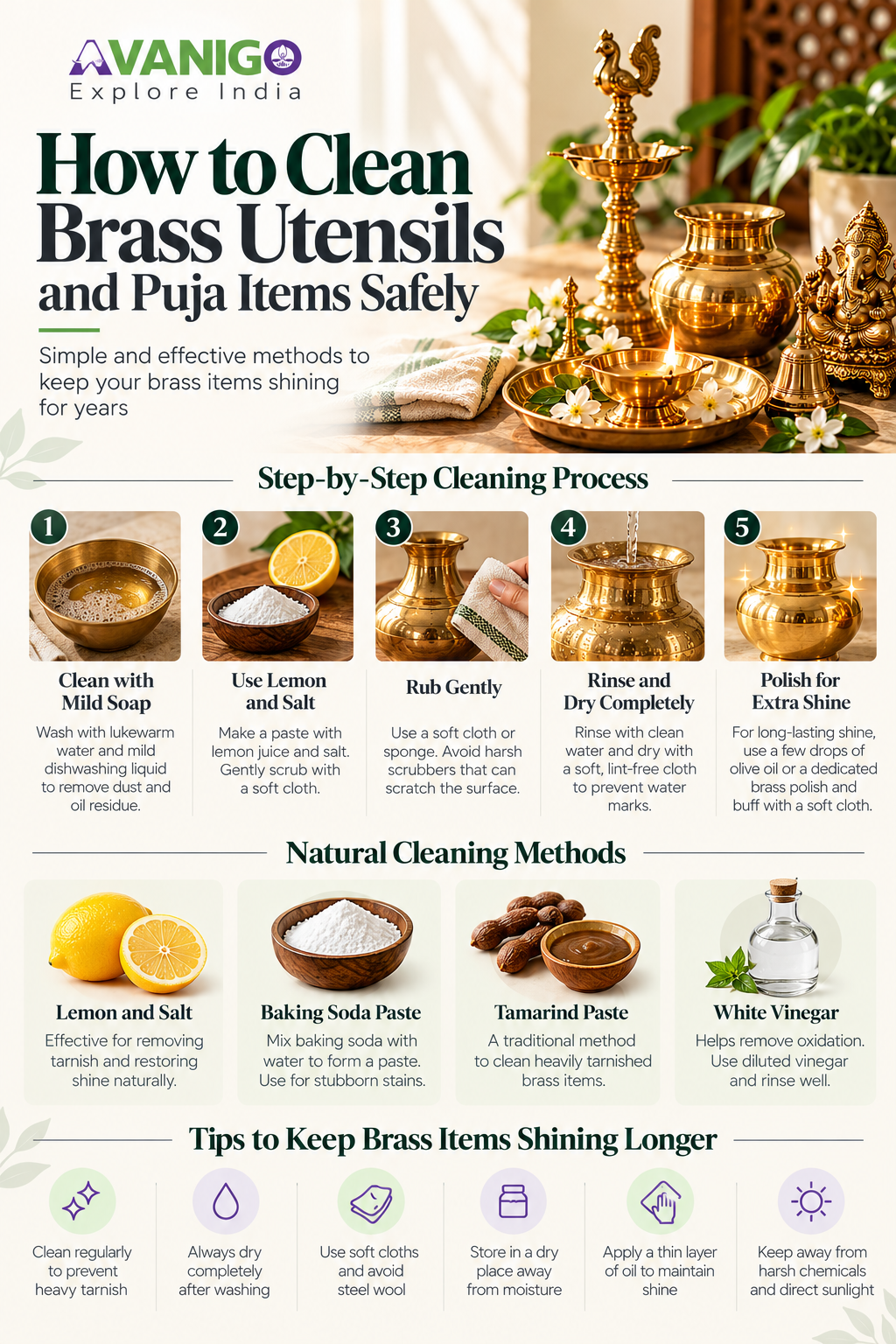
How to Clean Brass Utensils at Home
For routine cleaning, start with the least aggressive method.
Step 1: Remove Dust and Loose Residue
Wipe the utensil with a soft, dry cloth. Remove loose dust and residue before applying water or a cleaning product.
Avoid steel wool, rough scouring pads and abrasive brushes. These can scratch the surface and affect the finish.
Step 2: Wash with Mild Soap
For suitable, uncoated brass items, use lukewarm water and a small amount of mild dishwashing liquid.
Clean the surface gently with a soft sponge or cloth. Avoid leaving brass immersed in water for extended periods, particularly if the object has joints, decorative details like for puja samagri brass items or components made from other materials.
Step 3: Rinse Thoroughly
Remove soap residue with clean water. Residue left on the surface may affect the appearance or attract dirt.
For intricate designs, use a soft brush to reach recessed areas without scratching the metal.
Step 4: Dry Immediately
Dry the utensil thoroughly with a soft cloth. Pay attention to grooves, joints and the underside, where moisture can remain.
Allow the item to dry completely before storing it. This is especially important in humid environments.
How to Remove Tarnish from Brass
If mild washing does not restore the appearance, first check the manufacturer’s care instructions. A brass cleaner specifically labelled as suitable for the item’s finish may be appropriate.
Before using any cleaning product, test it on a small, inconspicuous area. Follow the instructions carefully and rinse or remove the product as directed.
Can Lemon and Baking Soda Clean Brass?
Lemon juice is acidic, while baking soda is mildly abrasive. Although household cleaning recipes sometimes combine these ingredients to remove tarnish, the mixture is not suitable for every brass object.
Acids can alter the surface, and abrasive particles can scratch polished or coated finishes. The result can also be uneven, particularly on aged, engraved or decorative objects.
For valuable, antique, plated or lacquered brassware, avoid experimenting with homemade mixtures. Use a product approved for the specific finish or consult a professional.
How to Clean Brass Diyas and Puja Items
Brass diyas, bells, plates and other puja accessories often collect oil, soot, ash, flowers and other ritual residue.
A careful cleaning process helps remove these materials without damaging decorative details.
- Allow the item to cool completely after use.
- Remove loose flowers, ash and other residue.
- Wipe away oil with a soft cloth.
- Wash suitable, uncoated items gently with mild soap and water.
- Use a soft brush for engraved or recessed areas.
- Rinse and dry thoroughly before storage.
Do not pour cold water onto a hot diya. Sudden temperature changes can damage some objects, particularly those containing other materials or structural weaknesses.
For antique lamps, religious objects with delicate finishes or items containing embedded materials, avoid aggressive polishing. Some people prefer to retain the aged appearance of traditional objects rather than remove the patina.
Brass Utensils Used for Cooking or Serving
Brass has a long history in Indian kitchens, but a vessel’s suitability depends on its construction, condition and intended use.
Before using a brass utensil for food, establish whether it is intended for food contact and whether its interior has a protective lining. Some traditional brass vessels are lined with another metal, and that lining may require specific care.
Avoid using an item for acidic foods unless the manufacturer confirms that it is suitable for that purpose. Acidic ingredients can react with exposed copper-containing surfaces.
Do not use damaged, corroded or flaking vessels for food preparation. If the lining is worn or the intended use is uncertain, consult the manufacturer or a qualified metalware specialist.
Cleaning a vessel until it shines does not establish that it is safe for cooking or food storage.
How to Store Brass Utensils and Puja Accessories
Correct storage can reduce tarnishing and limit the need for frequent polishing.
- Ensure that the item is completely dry before storage.
- Keep brassware in a dry, well-ventilated place.
- Use a soft cloth to separate items that may scratch one another.
- Avoid storing brass in damp cabinets or areas exposed to persistent moisture.
- Follow the manufacturer’s instructions for lacquered or coated objects.
- Keep food-contact utensils separate from cleaning chemicals and polishing products.
For seasonal puja accessories, clean and dry the items before packing them away. Check them before the next use, particularly if they have been stored for several months.
Common Brass-Cleaning Mistakes to Avoid
- Using abrasive scrubbers: Rough materials can leave scratches and reduce the quality of the finish.
- Applying strong acids indiscriminately: Acidic cleaners may damage coatings or alter the surface.
- Mixing cleaning chemicals: Combining products can create hazardous reactions. Use one suitable product at a time and follow its instructions.
- Leaving utensils wet: Residual moisture can contribute to surface changes and spotting.
- Polishing every antique item: Patina may be part of an object’s historical or decorative value. Aggressive polishing can reduce that value.
- Assuming a shiny utensil is food-safe: Appearance alone cannot establish the safety of the metal, lining or previous treatments.
Frequently Asked Questions
What is the easiest way to clean brass utensils?
For suitable, uncoated brass, begin with lukewarm water, mild dishwashing liquid and a soft cloth. Rinse thoroughly and dry immediately. Use a stronger cleaning product only if it is appropriate for the item’s finish.
How can I clean a brass diya after Diwali?
Allow it to cool, remove loose residue and oil, and wash it gently if its finish permits. Dry it completely before storing it. Avoid abrasive scrubbing that could damage engravings or decorative details.
Can I use vinegar to clean brass?
Vinegar is acidic and can affect some brass finishes. It should not be used indiscriminately, particularly on plated, lacquered, antique or valuable objects. Check the care instructions before choosing a cleaning method.
Why does brass turn black?
Brass can develop dark patches or tarnish through surface reactions, exposure to moisture and contact with various residues. The appearance may also reflect the item’s finish, age or previous cleaning treatments.
How often should brass utensils be cleaned?
Clean brassware when it becomes dirty or develops residue. Routine gentle cleaning and thorough drying are generally preferable to frequent aggressive polishing.
Preserve Traditional Brassware with the Right Care
Brass utensils and puja accessories can remain useful for years when they are cleaned and stored appropriately. The safest method depends on the object’s finish, condition and intended purpose.
Start with gentle cleaning, avoid unverified remedies on valuable pieces and follow product-specific instructions for anything used in food preparation. Careful maintenance preserves both the appearance and practical value of traditional brassware.