
Quick Navigation
Borra Caves, Araku: History, Geology, Legends and the Natural Wonder Beneath the Eastern Ghats
Deep inside the Ananthagiri Hills of the Eastern Ghats, the landscape changes abruptly.
The forests and coffee plantations of the Araku region give way to limestone, rock chambers, narrow passages and enormous natural formations created by water over geological time. This is Borra Caves, one of the most remarkable natural heritage sites in Andhra Pradesh.
For visitors, the caves are visually spectacular. For geologists, they are an example of karst landscape and cave development in limestone. For historians and archaeologists, the site has associations with early human activity. And for communities living around the caves, it is also a place of religious belief and oral tradition.
That combination is what makes Borra Caves particularly interesting.
The documented history of the caves begins in the 19th century, but the landscape itself is vastly older. The caves are also associated with the Gosthani River and a naturally formed rock structure regarded locally as a Shiva Lingam. Government tourism sources describe the caves as a geo-heritage site and record their karstic limestone formations, archaeological importance and religious associations.
The important distinction is this: the geology of Borra Caves can be scientifically explained, while some of its cultural history survives through legend and oral tradition. Both are worth understanding, but they should not be confused.
Where Are Borra Caves?
Borra Caves are located in the Ananthagiri Hills of the Araku Valley region of Andhra Pradesh, in the present-day Alluri Sitharama Raju district.
The caves lie within the Eastern Ghats, a mountain system extending along much of eastern peninsular India. The surrounding landscape is characterised by forested hills, streams, coffee plantations and tribal settlements.
Government sources place the caves at roughly 1,400 metres above sea level, although some tourism material gives different elevation figures. The official district Forest Tourism page describes the cave system as extending to a depth of about 80 metres and covering an area of approximately two square kilometres.
For travellers exploring Araku Valley, Borra Caves are usually considered one of the region’s major natural attractions.
The History of Borra Caves
One of the most frequently repeated facts about Borra Caves is that they were discovered in 1807 by William King George of the Geological Survey of India as per Incredible India website.
That date is recorded by both Andhra Pradesh government tourism sources and India’s official tourism portal.
But the word discovered needs some qualification.
A geological cave does not suddenly come into existence when it is recorded by a surveyor. The 1807 date refers to its documentation in the modern geological record. The cave landscape itself had been developing for a vastly longer period through the interaction of water, rock and geological processes.
This distinction is important because Borra Caves are often described in popular tourism material as being “millions of years old”. While the limestone and geological setting belong to ancient geological history, the age of an individual cave passage or speleothem is not necessarily the same as the age of the rock itself.
The more useful question, therefore, is not simply “How old are Borra Caves?”, but “How did the cave system develop?”
How Were Borra Caves Formed?
This is where Borra Caves become particularly interesting from a geological perspective.
The caves occur in karstic limestone. Karst landscapes develop when water interacts with soluble rocks, particularly limestone, over long periods.
Rainwater absorbs carbon dioxide from the atmosphere and soil as it moves through the ground. This makes the water mildly acidic. As it moves through cracks and joints in limestone, it can gradually dissolve and enlarge them.
Over geological time, tiny fractures can become channels, cavities and eventually larger underground spaces.
Borra Caves contain the characteristic features associated with this process, including stalactites and stalagmites, collectively referred to as speleothems.
- Stalactites grow downward from cave ceilings.
- Stalagmites grow upward from cave floors.
- When the two eventually meet, they can form columns.
The process does not necessarily stop once a cave has formed. Water continues to enter the cave environment, depositing minerals and altering existing formations.
This is why the cave should not be viewed simply as an underground chamber frozen in time. It is part of an ongoing geological system
The science behind the formations
Water carrying dissolved calcium carbonate enters the cave through cracks and pores in the limestone.
When conditions change inside the cave, including the loss of carbon dioxide from the water, calcium carbonate can precipitate and accumulate.
Repeated deposition over very long periods creates the distinctive forms seen inside Borra Caves.
Scientific research on Borra Caves has gone further than simply describing the formations. Research into the cave’s speleothem carbonates has found evidence of microbial involvement in the formation of some deposits, demonstrating that the cave environment has a more complex biological and chemical history than the photographs seen by tourists might suggest.
Why Are Borra Caves Geologically Significant?
Borra Caves are important because they provide a visible example of how water, limestone, underground drainage and mineral deposition interact to create karst landscapes.
Their significance also extends beyond the spectacular formations visible to visitors.
The caves occur within a mineral-rich geological region. Government documentation for the area records minerals including calcite, crystalline limestone, quartz, apatite, mica and other mineral deposits in and around the Borra region.
The cave’s speleothems also preserve information about past environmental conditions. Geological research and recent scientific field studies have treated Borra Caves as an important site for examining Quaternary landscape evolution, speleothem development and palaeoenvironmental records.
In other words, the formations are not merely decorative.
They are geological records.
Borra Caves and the Gosthani River
One of the most fascinating aspects of Borra Caves is its connection with the Gosthani River.
The river originates in the Ananthagiri region, and the landscape around Borra Caves is closely associated with its headwaters.
Here, however, science and tradition tell slightly different stories.
Geographically, the Gosthani is a river originating in the Ananthagiri hill region. The cave system is part of the surrounding drainage and karst landscape.
Local tradition tells a more symbolic story.
According to a widely narrated tribal legend, a cow grazing above the caves fell through an opening in the roof. A cowherd searching for the animal entered the cave and found a naturally formed stone resembling a Shiva Lingam. The discovery was interpreted as divine protection of the cow, and the site subsequently acquired religious significance.
Another local tradition associates water dripping onto the Shiva Lingam with the origin of the Gosthani River. Andhra Pradesh government tourism material records this belief explicitly.
The important point is to distinguish cultural belief from hydrological evidence.
The story is an important part of the cultural landscape of Borra Caves. It should not, however, be presented as scientific evidence for the physical origin of the river.
Is There a Shiva Lingam Inside Borra Caves?
Yes.
A naturally formed rock structure deep inside the cave is regarded by devotees as a Shiva Lingam. The structure has become an important part of the religious identity of the site.
The Andhra Pradesh government’s Religious Tourism page specifically describes the naturally formed structure and its religious significance.
This is an interesting example of how natural landscapes acquire cultural meaning.
The geological process creates the rock.
Human communities interpret its form.
That interpretation can then become part of the site’s history and identity.
At Borra, geology and belief therefore exist side by side rather than needing to be treated as competing explanations.
Did Rishis Perform Penance in Borra Caves?
This is one of the questions that frequently arises when people discuss the caves.
There are formations inside Borra Caves that visitors and guides associate with familiar religious or human forms. Official tourism material mentions shapes interpreted as Shiva-Parvati, a mother and child, a crocodile, a human brain and even a rishi’s beard.
But there is an important distinction.
There is no reliable historical or archaeological evidence in the authoritative sources reviewed for this article establishing that a particular rishi or group of rishis performed penance inside Borra Caves.
The association appears to belong to the realm of local interpretation, religious imagination and oral tradition, rather than documented history.
That does not make the tradition unimportant.
Caves have long occupied a distinctive place in Indian religious imagination. Their darkness, isolation and distance from ordinary settlements have made them natural spaces for stories of meditation, asceticism and spiritual practice.
Borra Caves certainly have the physical qualities that can encourage such associations.
But a responsible account should distinguish between:
What the geology establishes:
The formations were produced by natural processes involving water, limestone and mineral deposition.
What local tradition conveys:
Certain formations resemble religious figures or objects and have acquired sacred interpretations.
What historical evidence establishes:
The modern geological documentation of the caves dates to 1807, while archaeological research indicates much earlier human interaction with the region.
That distinction makes the story more credible, not less.
Borra Caves and Prehistoric Human Activity
The cultural history of Borra Caves extends beyond modern religious traditions.
The caves have archaeological significance, with stone tools associated with prehistoric human activity reported from the site. India’s official tourism portal states that anthropologists have recovered stone tools dated to approximately 30,000 to 50,000 years ago.
Scientific literature also identifies Borra Caves as archaeologically important because of the discovery of Palaeolithic implements.
This changes the way we should understand the caves.
Borra is not simply a geological curiosity discovered by a British-era survey.
The underground landscape belongs to a much longer human story.
Long before the site became a destination for modern tourists, the surrounding Eastern Ghats were landscapes through which prehistoric communities moved and lived.
The archaeological evidence should also be interpreted carefully. The existence of stone tools indicates human activity associated with the site, but it does not by itself tell us that the cave functioned as a permanent settlement or that every part of the present tourist-accessible cave was occupied continuously.
Why Do the Rocks Look Like Gods, Animals and Human Figures?
Walk through Borra Caves and the human brain immediately begins looking for familiar shapes.
A formation becomes a face.
Another resembles an animal.
One looks like a human figure.
Another may appear to resemble Shiva and Parvati.
This is not unusual. Humans naturally recognise familiar patterns in irregular forms, a phenomenon known as pareidolia.
The cave’s mineral formations provide unusually good material for this because stalactites, stalagmites and flowstone develop in unpredictable shapes.
Official tourism sources list several popular interpretations, including Shiva-Parvati, a mother and child, a crocodile, a brain and a rishi’s beard.
These names are therefore best understood as interpretations of natural formations, not evidence that the rocks were sculpted into those figures.
And that distinction actually makes the caves more fascinating.
The same formation can be read simultaneously through geology, imagination and cultural memory.
Borra Caves as a Geo-Heritage Site
Andhra Pradesh’s official district information lists Borra Caves among the state’s geo-heritage sites.
That designation reflects an important principle in geological tourism.
Natural heritage is not limited to mountains, waterfalls and scenic viewpoints.
A cave can preserve evidence of:
- Rock formation and dissolution
- Underground drainage
- Mineral deposition
- Landscape evolution
- Past environmental conditions
- Prehistoric human interaction with landscapes
Borra Caves bring several of these dimensions together in one relatively accessible location.
That makes them particularly valuable for geotourism and environmental education, as well as conventional sightseeing.
Borra Caves Pictures
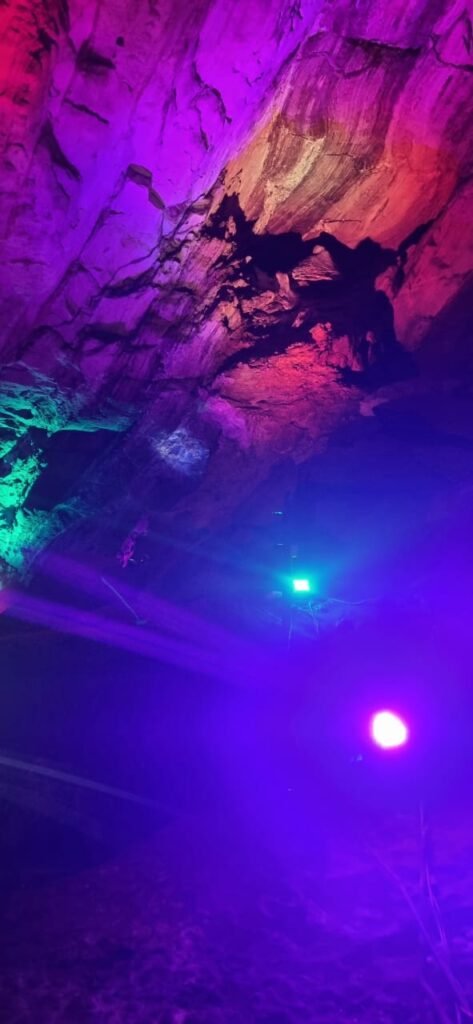
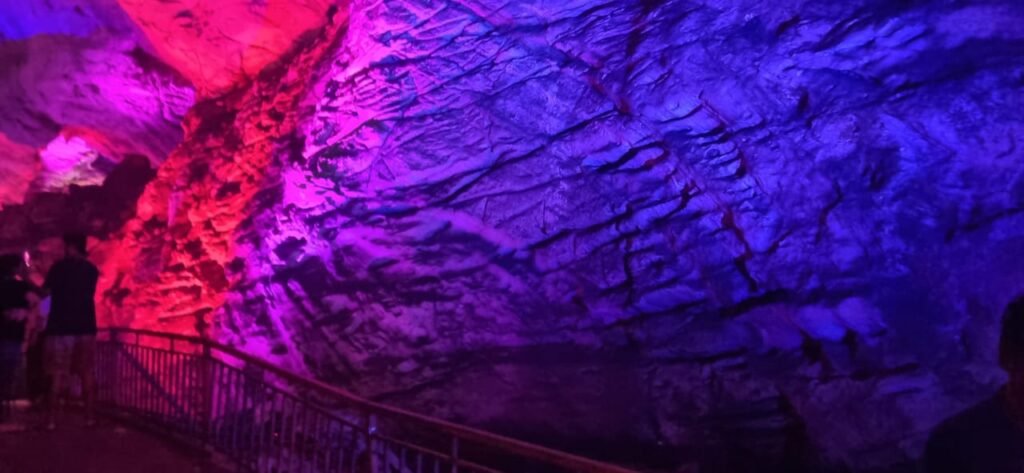
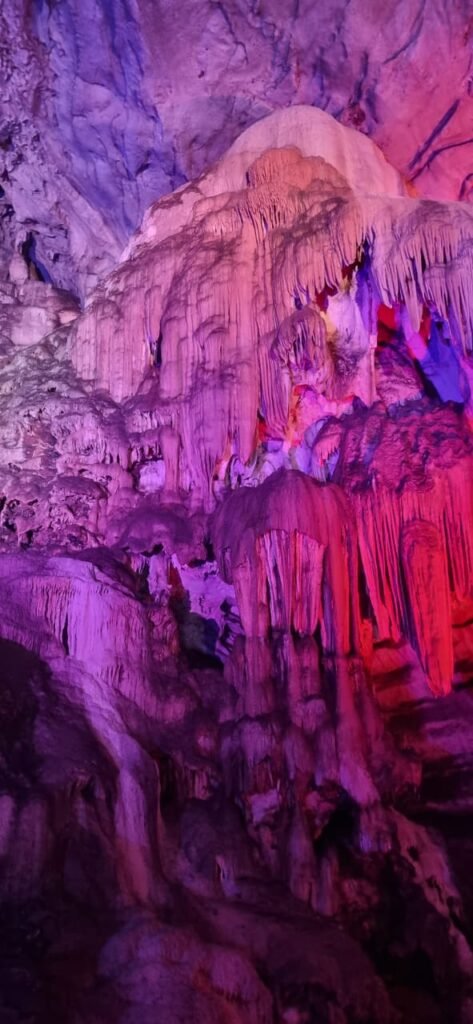
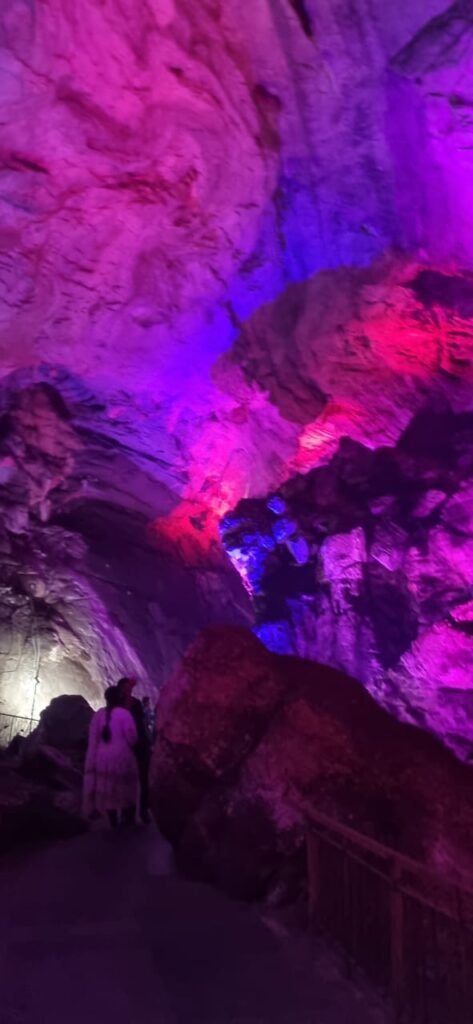
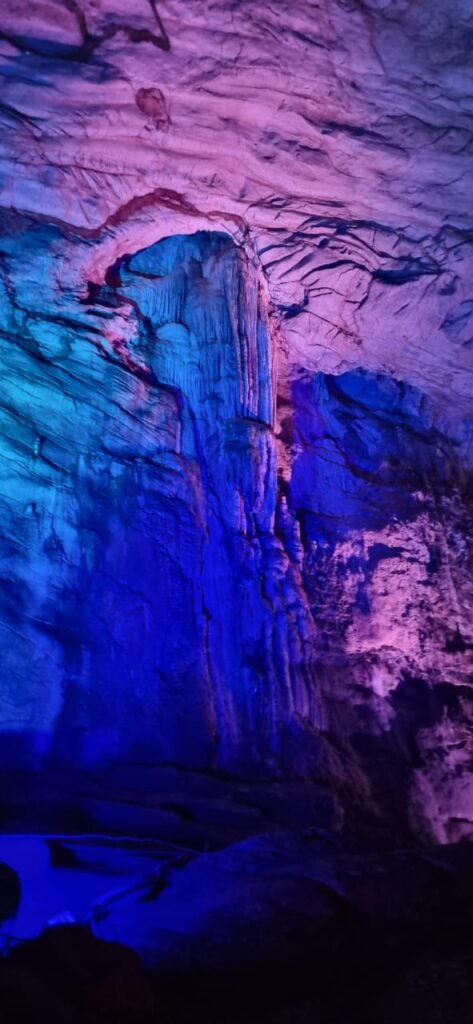
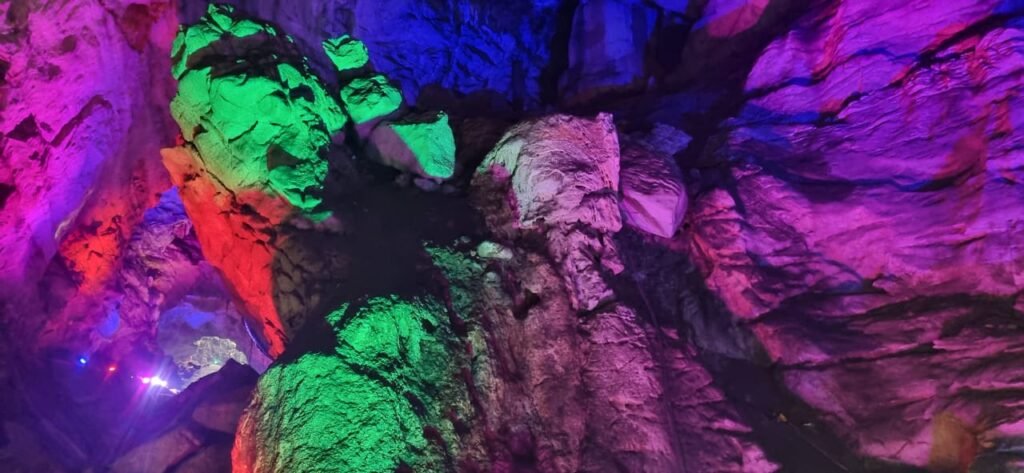
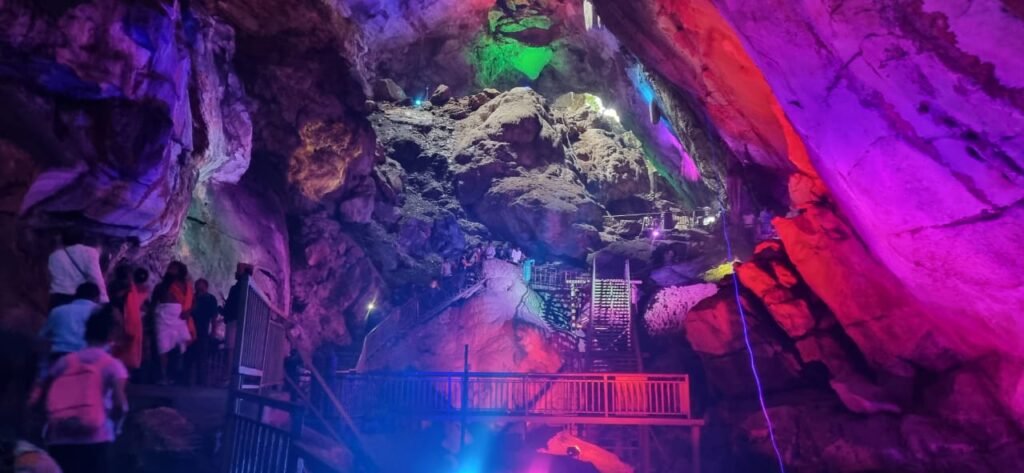
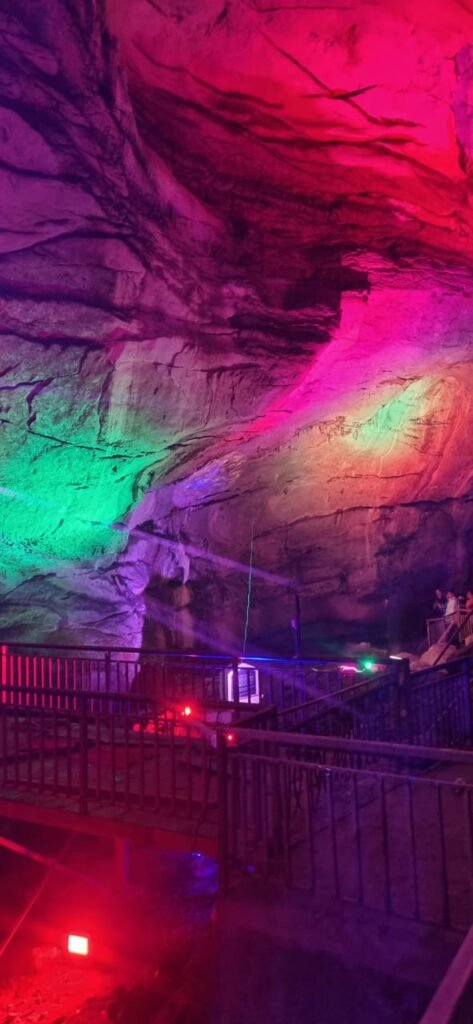
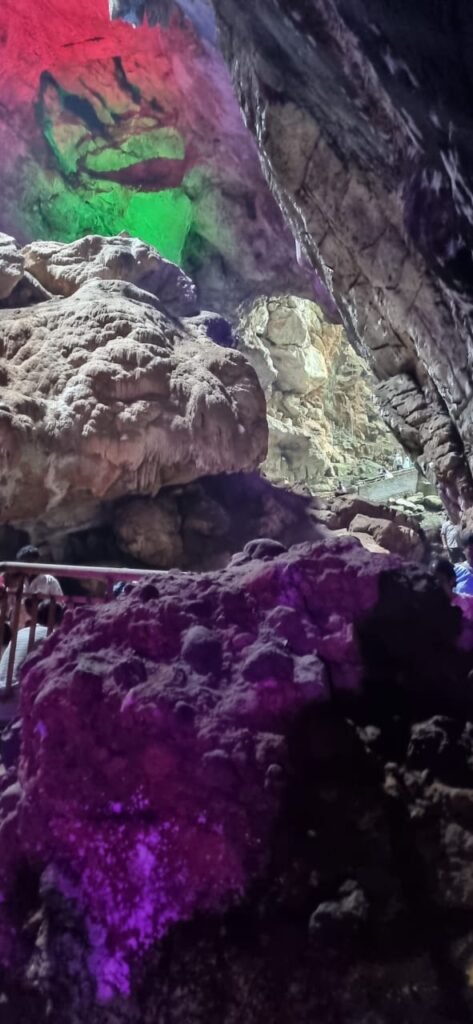
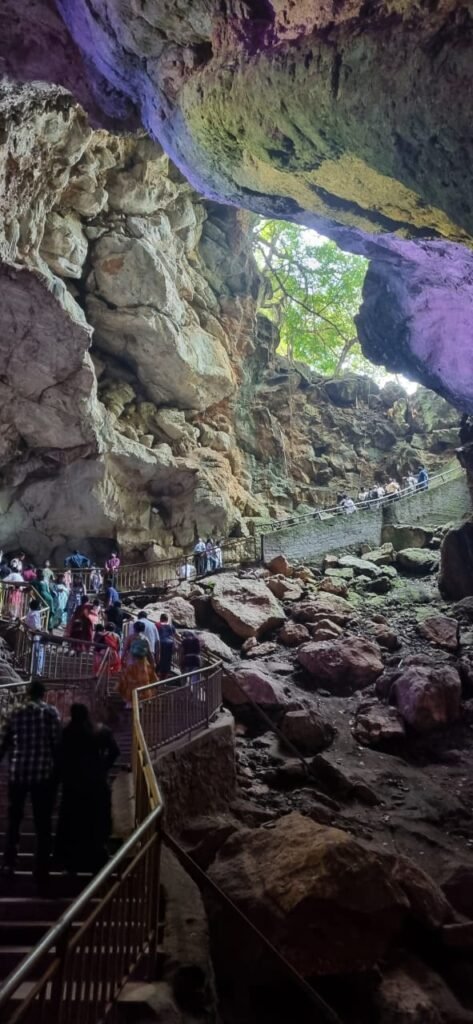
Borra Caves, Araku: A Meeting Point of Science and Culture
There is a temptation to divide Borra Caves into two categories.
One is the “scientific” cave: limestone, karst, speleothems and prehistoric tools.
The other is the “spiritual” cave: Shiva Lingam, legends, tribal traditions and religious significance.
In reality, the site’s identity comes from the interaction of both.
The geological formations created the physical landscape.
People then encountered, named, interpreted and incorporated that landscape into their cultural memory.
The story of the cow and cowherd explains how local tradition understands the sacred discovery. The Shiva Lingam gives the cave a continuing religious identity. The Gosthani River connects the cave to the wider landscape. The prehistoric tools extend the human story thousands of years into the past.
And the 1807 geological documentation marks another chapter in the site’s modern history.
Borra Caves is therefore best understood not as one story, but as several layers of history occupying the same landscape.
What Makes Borra Caves Different from a Typical Tourist Cave?
| Aspect | What makes Borra Caves significant |
| Geology | Karstic limestone cave system with stalactites, stalagmites and other speleothems |
| Landscape | Located within the Eastern Ghats and Ananthagiri Hills of the Araku region |
| History | Documented in 1807 by William King George of the Geological Survey of India |
| Archaeology | Stone tools associated with prehistoric human activity have been reported |
| Religion | Naturally formed Shiva Lingam regarded as sacred |
| Folklore | Tribal traditions include the cowherd and lost-cow story |
| Hydrology | Closely associated with the headwater landscape of the Gosthani River |
| Geo-heritage | Recognised by Andhra Pradesh as a geo-heritage site |
| Biology | Cave environment supports organisms including bats and the golden gecko |
| Tourism | One of the principal natural attractions around Araku Valley |
Government sources specifically document the cave’s karstic structures, religious traditions, archaeological importance and cave fauna.
Visiting Borra Caves
Borra Caves remain one of the principal attractions for people travelling through Araku Valley.
The official tourism information currently lists visiting hours as 10:00 AM to 5:00 PM.
The cave interior involves uneven surfaces and stairways, so visitors should expect a walking experience rather than a conventional museum-style attraction.
The wider region also offers several places that can be combined with a Borra Caves visit, including Ananthagiri’s coffee plantations, Tyada Railway Tunnel, Damuku viewpoint and other attractions around Araku Valley.
The Borra Caves railway station also provides an interesting connection to the region’s transport history. Government information notes that the railway line passes through the area, while the cave itself has a natural geological joint through which the railway alignment passes above the underground formation at one point.
Frequently Asked Questions About Borra Caves
Where are Borra Caves located?
Borra Caves are located in the Ananthagiri Hills of the Araku Valley region in Andhra Pradesh, within the Eastern Ghats.
Who discovered Borra Caves?
The caves were documented in 1807 by William King George of the Geological Survey of India.
How were Borra Caves formed?
Borra Caves developed in limestone through long-term karst processes, in which water interacts with and gradually dissolves soluble rock. Mineral-rich water subsequently produces stalactites, stalagmites and other speleothems.
What is the geological significance of Borra Caves?
The caves provide an important example of karstic limestone processes, cave development and speleothem formation in the Eastern Ghats. They are also recognised by Andhra Pradesh as a geo-heritage site.
Is there a Shiva Lingam inside Borra Caves?
Yes. A naturally formed rock structure deep inside the cave is regarded by devotees as a Shiva Lingam and is an important part of the site’s religious significance.
Is the Gosthani River believed to originate from Borra Caves?
Local tradition connects the river’s origin with water dripping over the Shiva Lingam inside the cave. Geographically, the Gosthani originates in the Ananthagiri hill region. The traditional account and the geographical description should therefore be treated separately.
Did rishis meditate or perform penance in Borra Caves?
There is no reliable historical or archaeological evidence identified in the sources reviewed that confirms rishis performed penance inside Borra Caves. Some formations are popularly interpreted as resembling a rishi’s beard or other religious figures, but these are natural formations.
Are Borra Caves associated with prehistoric humans?
Yes. Stone tools associated with prehistoric human activity have been reported from the caves, including finds described as dating approximately 30,000 to 50,000 years ago.
The Real Wonder of Borra Caves
Borra Caves do not need an exaggerated origin story to be extraordinary.
Their appeal is already embedded in the landscape.
Water shaped the limestone. Geological time created the cave. Prehistoric people interacted with the landscape. Local communities gave the formations meaning. Religious traditions made parts of the cave sacred. And modern geological research continues to reveal what lies within the rock.
That is what makes Borra Caves worth visiting.
Not simply because the formations are dramatic, but because they represent something rare in a tourist destination: a place where geology, archaeology, ecology, folklore and living cultural traditions can still be experienced in the same landscape.
For anyone exploring Araku Valley and the Eastern Ghats, Borra Caves are therefore more than a stop on an itinerary.
They are a journey beneath the landscape itself.
About the Author
Mrudula Sai is a senior corporate leader with over 15 years of professional experience, an avid traveller and a keen enthusiast of India’s diverse cultural traditions, heritage and practices.