
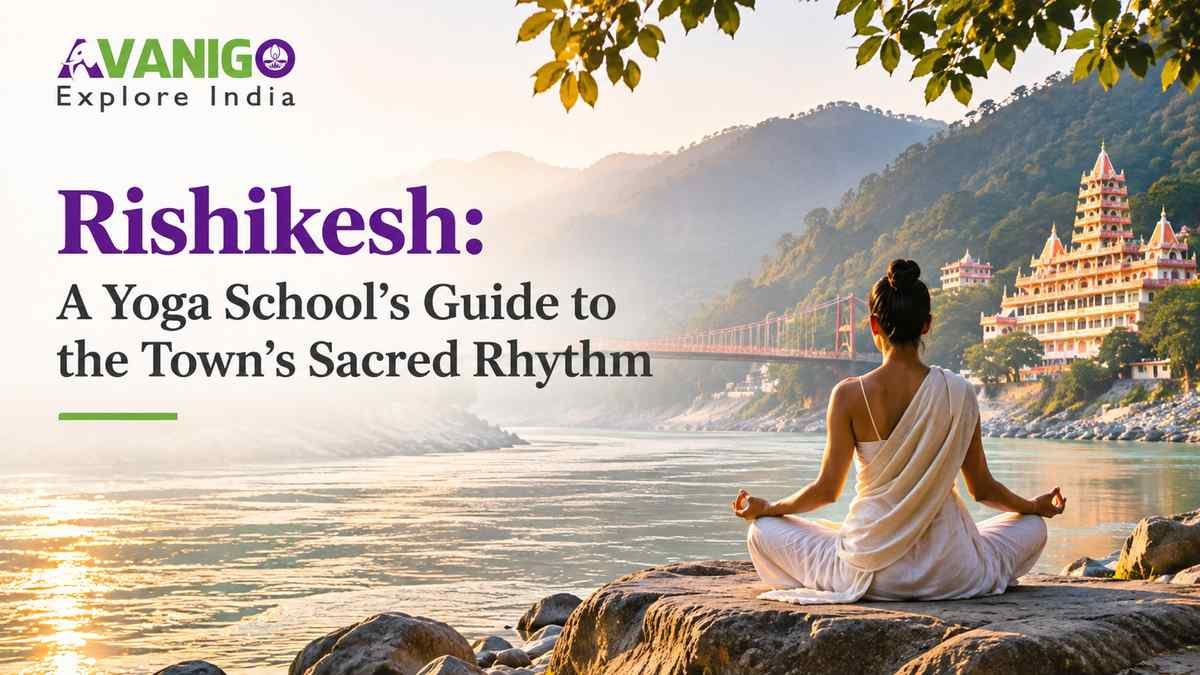
Rishikesh is a small town in the foothills of the Himalayas where the Ganga leaves the mountains and enters the plains, and its daily rhythm is set by practice, prayer and the river rather than by traffic and office hours. This guide comes from the teaching floor of Aatm Yogashala in Tapovan, where our students live that rhythm for a month at a time.
Key takeaways:
- The town runs on a practice clock: dawn breathing, morning asana, evening aarti at the ghats.
- Tapovan, above the main town, is the quiet base most training schools use.
- First-timers should plan around the river, the heat and the early mornings, not around a sightseeing list.
Quick Navigation
The town and the river
Rishikesh sits where the Ganga comes down from the mountains, and the river is the centre of the town in a practical sense, not only a symbolic one. People bathe in it, sit beside it, walk along it and cross it on the two suspension bridges, Ram Jhula and Laxman Jhula. The water is cold and fast, and the current is real: swimming is for the calm stretches and for strong swimmers only, and the ghat steps are the place most visitors actually meet the river.
The town has two main parts. The older town around Triveni Ghat and the main market is busy, full of shops, temples and guesthouses. Across the river, Tapovan and the area around the bridges is where most yoga schools, cafes and quieter stays sit. The walk between the two takes about twenty minutes, and many students make it daily.
Meat and alcohol are not sold inside the town limits, and the town is officially vegetarian. This is not a rule imposed on visitors as a test; it is simply how the town has lived for generations, and the food on offer reflects it. Simple thalis, dal, rice, seasonal vegetables, fruit and chai are everywhere, and most training schools serve sattvic meals at fixed hours as part of the course.
Tapovan: the quiet base
Tapovan sits on the hillside above the main town, and it is where our school is based. The streets are narrower and quieter, the air is a little cooler, and the walk down to the river takes ten to fifteen minutes. Students stay here because the mornings are quiet enough for 5:30 am practice, and because the walk itself becomes part of the day.
A training day in Tapovan starts early. The first class is breathing practice, then asana, then breakfast. Philosophy and anatomy fill the middle of the day, and the second asana session comes in the afternoon. Evenings are for meditation, study or the walk down to the ghats. By nine in the evening most students are asleep, because the next day starts before dawn.
For a first-timer, Tapovan is the practical choice: guesthouses and small hotels at every price point, cafes with reliable food, a pharmacy and small shops for anything forgotten, and the bridges within walking distance. Staying here means the town’s noise stays below the hill while everything you need stays within reach.
The ghats and the evening aarti
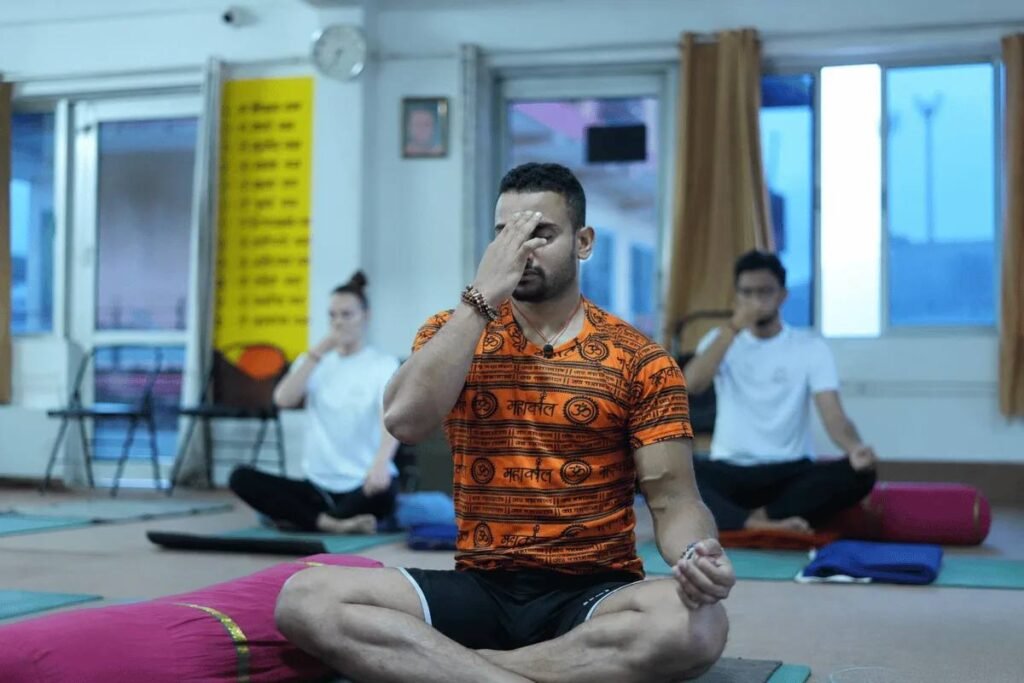
The ghats are the stone steps that lead down to the river, and they are the town’s public rooms. People sit there through the day: readers, sadhus, families, travellers, and students from the schools. Triveni Ghat is the main one, and the evening aarti there is the town’s daily gathering.
The aarti begins around sunset. Priests hold large fire lamps, bells ring, and the chanting carries across the water. Visitors are welcome to sit and watch, and small leaf boats with a flower and a flame are set on the river. The practical advice is simple: arrive early for a place to sit, keep your belongings close, and stay for the whole ceremony rather than leaving halfway through. The aarti lasts about an hour, and the walk back up the hill after it is part of the evening for everyone in town.
Parmarth Niketan, on the other bank, holds its own aarti, and both are worth seeing. The difference is one of scale: Triveni is the town’s gathering, Parmarth is the ashram’s. Neither asks anything of a visitor beyond quiet attention and modest dress.
The daily rhythm of a training school
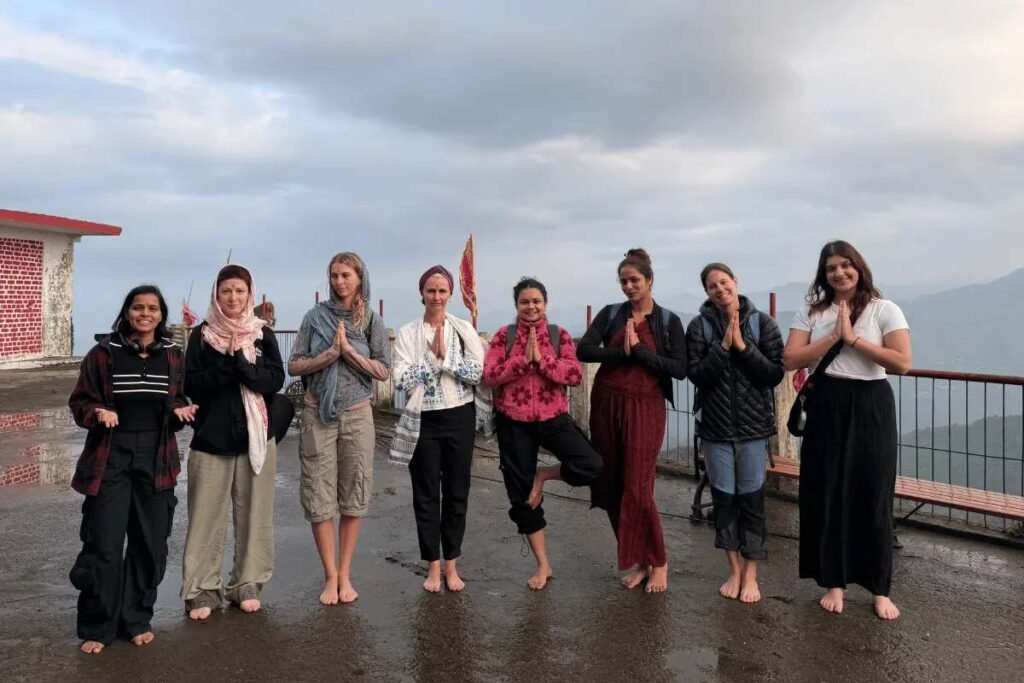
A yoga teacher training course in Rishikesh is not a holiday with classes attached. The day is structured, and the structure is the teaching. A typical training day at our school runs like this:
- 5:30 am: Breathing practice before asana, while the mind is quiet.
- 6:30 am: The main morning practice, usually Hatha or Ashtanga.
- 8:30 am: Simple sattvic food, eaten together.
- 10:00 am: Philosophy or anatomy. The Patanjali Yoga Sutras, the Hatha Yoga Pradipika and the Gheranda Samhita are the texts the course works from.
- 1:00 pm: Lunch and rest.
- 3:30 pm: Afternoon asana or teaching practice.
- 5:30 pm: Meditation or evening walk to the ghats.
- 7:00 pm: Dinner, then study and sleep.
Six days a week, with Sunday as a rest day. Students who arrive expecting a relaxed retreat are often surprised by the first week; students who arrive expecting a boot camp are often surprised by how much rest and food matter to the schedule. The rhythm is demanding and it is also protective: fixed meals, fixed sleep and fixed practice are what let a body absorb a month of daily training.
What first-timers should expect
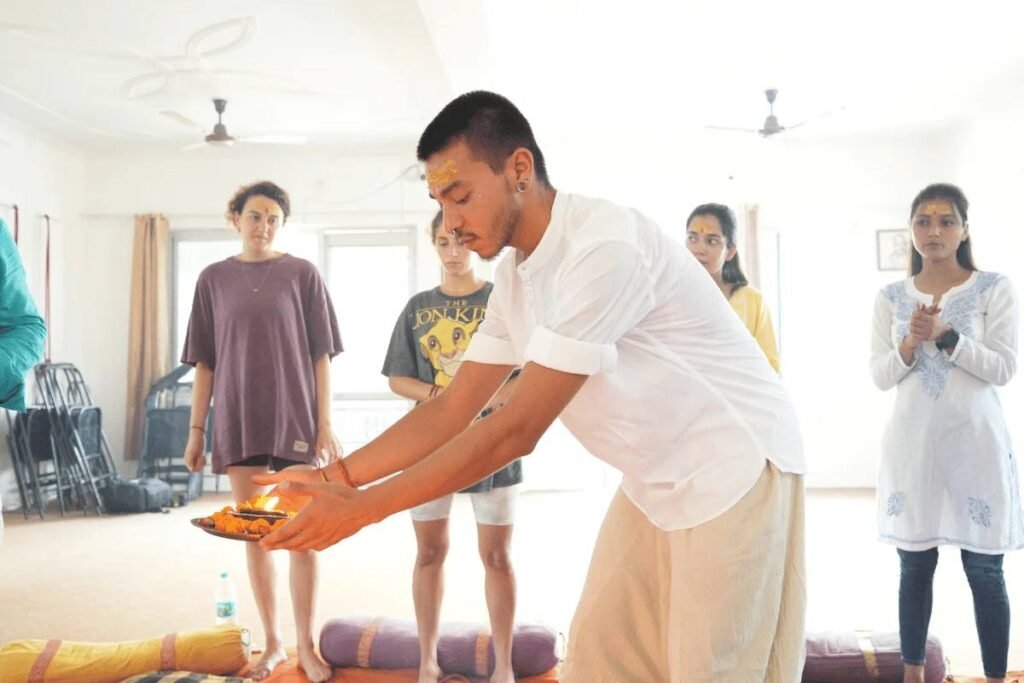
The first thing to expect is the early mornings. The 5:30 am start is not a formality; it is when the air is cool and the town is quiet, and it is the part of the day the teachers protect most. Bring a warm layer for the mornings even in the warmer months, because the hills cool overnight.
The second thing is the food. Training schools serve sattvic meals: rice, dal, seasonal vegetables, fruit and chai, at fixed times. The portions are generous and the food is plain. Students who snack between meals usually find their practice suffers, so the advice is to eat what is served, when it is served, and let the body settle into the routine.
The third thing is the pace of the town. Rishikesh is not a place of fast service and instant answers. Shops open late, the internet is slow by city standards, and the bridges get crowded at midday. The students who enjoy the month most are the ones who stop fighting this and let the town set the pace.
Practical points worth knowing before you arrive:
- Clothing: Modest dress is expected in temples and on the ghats: shoulders and knees covered. Loose practice clothes are right for class; a shawl or light jacket is useful for mornings and evenings.
- Money: ATMs exist in the main town and in Tapovan, but they run out of cash on busy weekends. Carry enough cash for a few days.
- Health: Drink bottled or filtered water, eat at busy places, and keep any regular medication with you. The school keeps a first-aid kit and the town has clinics; the nearest large hospital is in Dehradun, about an hour away.
- Phones: Keep the phone on silent during class and at the ghats. Many students find that the month works better with the phone used less, not more.
Choosing a course in Rishikesh
Rishikesh has many yoga schools, and the choice matters more than the brochure. The questions worth asking before booking are simple ones: who are the teachers, and how long have they taught these courses? What is the daily schedule, hour by hour? What is included in the fee: accommodation, food, books, airport pickup? Is the school registered with Yoga Alliance, and what certification does the course lead to?
At our school, the 200 hour yoga teacher training in Rishikesh runs for one month and leads to the RYT 200 certification. The teachers are Indian masters who learned in the ashrams of Rishikesh and have taught these courses for years. Anatomy is taught in the morning, philosophy after lunch, and teaching practice begins in the second week, so students graduate having already taught full classes.
Shorter options exist for people who cannot take a month away. A 100-hour foundation course runs for two weeks and covers the first half of the RYT 200 path, and a 50-hour course runs for one week. Both are taught by the same teachers, on the same schedule, in the same shala.
Frequently asked questions
When is the best time to visit Rishikesh?
The months from October to March are the most comfortable, with cool mornings and clear days. April and May are hot, and the monsoon months of July and August bring heavy rain and a swollen river.
Is Rishikesh safe for solo travellers?
The town is used to solo travellers, including solo women, and the yoga-school areas are quiet and well walked. The usual care applies: stay in lit areas after dark, keep valuables close at the ghats, and let the school know your plans on rest days.
Do I need to be flexible to join a training course?
No. Flexibility is what practice builds, and the foundation weeks start from the basics. The teachers adjust the practice to the student, not the other way round.
How do I reach Rishikesh?
The nearest airport is Dehradun (Jolly Grant), about 35 kilometres away, and the nearest large railway station is Haridwar, about 25 kilometres away. Most schools, including ours, arrange airport pickup.
Can I visit the school before booking a course?
Yes. Write to the school first, and visit on a weekday morning when classes are running. Seeing a real class tells you more than any brochure.
About the author
Team Aatm Yogashala, Rishikesh — https://aatmyogashala.com/