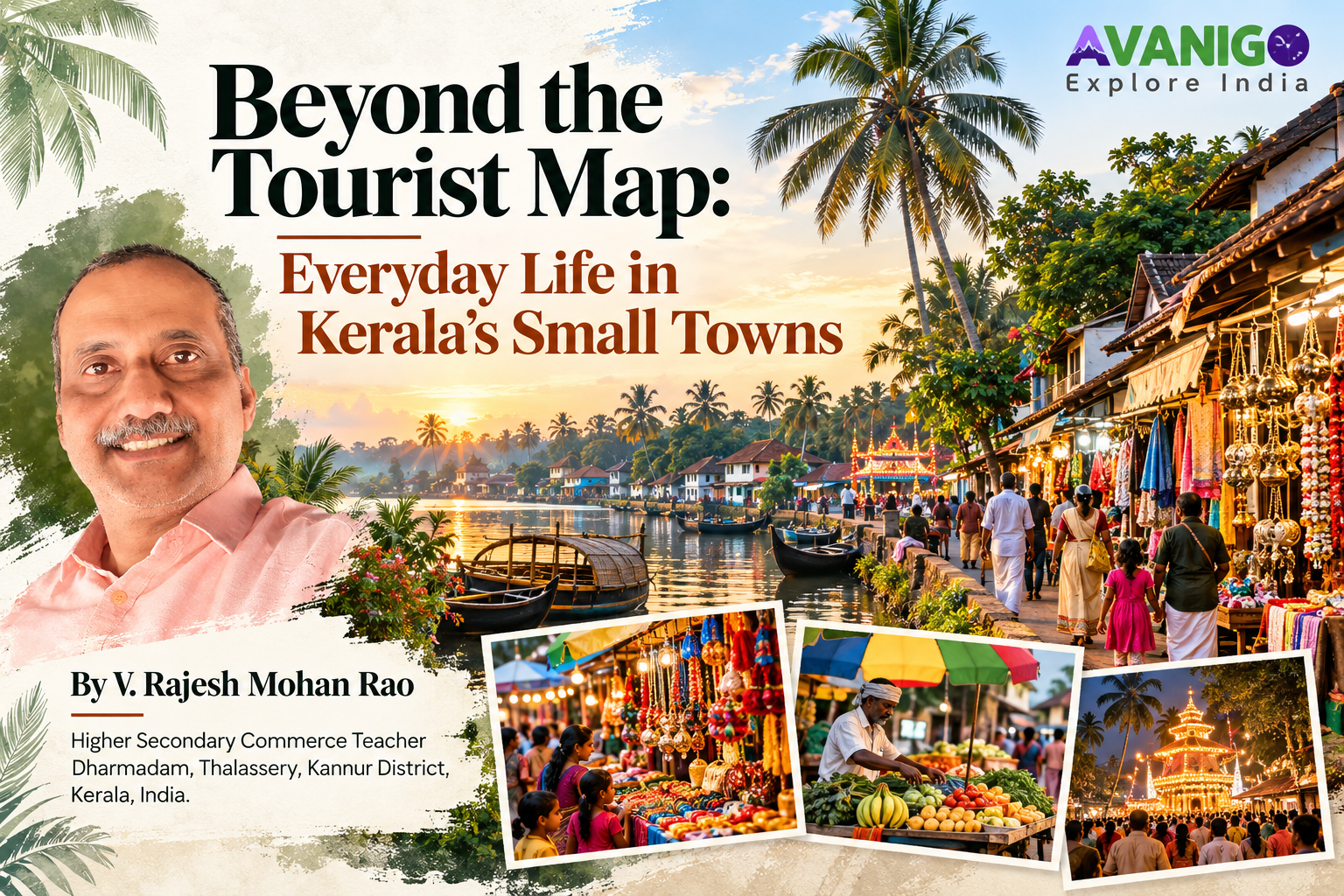
By V. Rajesh Mohan Rao
Higher Secondary Commerce Teacher
Dharmadam, Thalassery, Kannur District, Kerala, India
A festival market can tell us more about a place than a tourist brochure ever could. Amid the crowds, colourful stalls, local food and lively conversations, we discover not only what people buy and sell, but also how cultures meet and relationships grow. At the Andalloor Kavu festival in Dharmadam, near Thalassery in Kerala’s Malabar region, I met traders who had travelled from Goa. Our conversation gave me a glimpse of how a local celebration could bring people from different states together through business and a shared appreciation of culture. That experience strengthened my belief that to understand a place, we must look beyond its famous attractions and pay attention to the everyday lives of its people.
One feature that particularly interests me about Malabar is the activity surrounding festivals. During festival seasons, temporary markets and stalls attract large crowds. People visit them to buy clothes, toys, household goods, decorations and food. From my observations, these markets are not merely places for shopping. Families enjoy walking among the stalls, children are attracted by colourful products, and friends and neighbours meet amid the festive atmosphere. For traders, these occasions provide opportunities to reach more customers and increase their business.
My experience at Andalloor Kavu was especially memorable because of the traders from Goa. I met two or three of them selling colourful bangles, necklaces, cosmetics and beauty products for women, as well as various items for children. I also noticed boutiques and other temporary stalls offering a variety of goods. The range of products and the crowds around the stalls showed me how festival markets bring different kinds of businesses together in one lively space.
During our conversation, the traders told me that they liked Kerala very much and particularly enjoyed the festival atmosphere. They also said that they intended to return every year. Their enthusiasm made a lasting impression on me. I realised that festivals offer travelling traders more than commercial opportunities: they allow them to experience another region, meet new people and become familiar with local traditions. Such encounters also help visitors learn about different products, customer preferences and business practices. The food stalls added further variety, allowing people to explore different tastes while enjoying the celebrations.
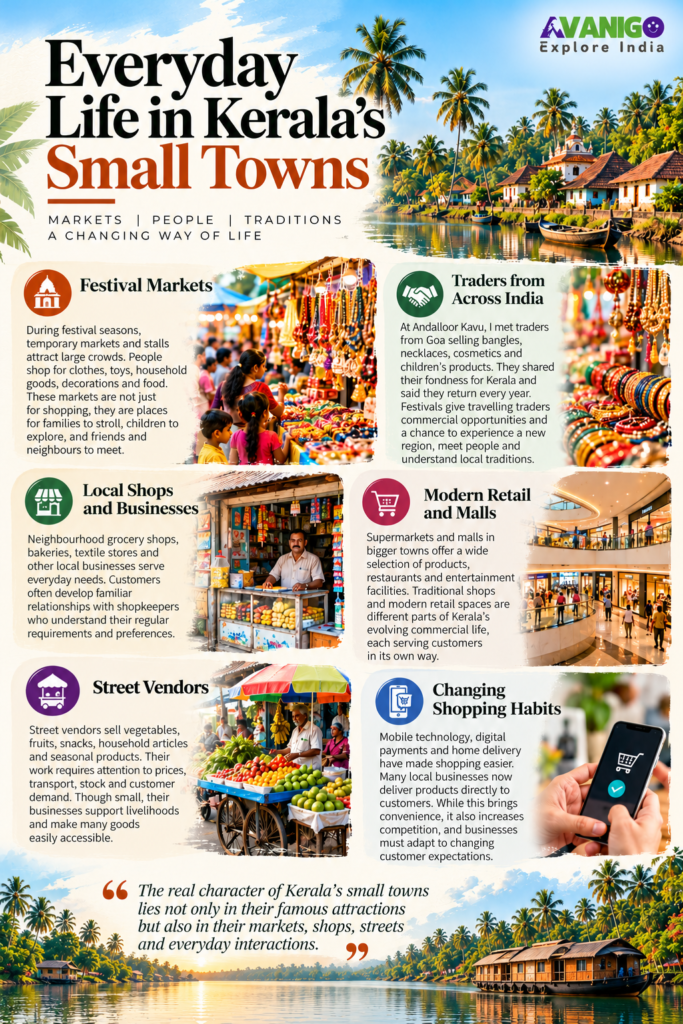
Small shops continue to play an important role in the towns and villages around me. Neighbourhood grocery shops, bakeries, textile stores and other local businesses serve everyday needs. Customers often develop familiar relationships with shopkeepers, who may understand their regular requirements and preferences. At the same time, supermarkets and large shopping malls in bigger towns have transformed the shopping experience. They offer a wide selection of products, restaurants and entertainment facilities. I see traditional shops and modern retail spaces as different parts of Kerala’s changing commercial life, each serving customers in its own way.
Street vendors are another familiar feature of Malabar. They sell vegetables, fruits, snacks, household articles and seasonal products, often finding more customers during festivals and other busy occasions. Their work requires attention to prices, transport, stock and customer demand. Although their businesses may be small, they support livelihoods and make many goods easily accessible. I believe their contribution deserves recognition because the economic life of a town depends not only on large businesses but also on the efforts of numerous small traders and independent sellers.
Shopping habits have also changed with the growth of mobile technology, digital payments and home delivery. Customers can now order groceries, food and other essentials without visiting a shop. Some local businesses deliver products directly to customers, combining familiar personal service with modern convenience. These developments have made shopping easier for many people, but they have also increased competition for small retailers. Businesses must adapt to changing expectations while managing costs and maintaining good customer relationships.
These changes in business influence culture and social life as well. Festival shopping continues to bring families and communities together, while malls and online platforms reflect new lifestyles. Traditional food stalls coexist with modern restaurants, and familiar neighbourhood shops operate alongside organised retail chains. My experience at Andalloor Kavu showed me how a local celebration can connect people from different states through trade and conversation. Business stalls can become informal spaces for exchanging information, discovering new products and learning about different ways of life.
For me, the real character of Kerala’s small towns lies not only in their famous attractions but also in their markets, shops, streets and everyday interactions. The enthusiasm of the traders from Goa, the variety of goods at festival stalls, the efforts of street vendors and the changing services offered by local businesses all form part of a larger story about livelihood, culture and adaptation. Travellers who look beyond the usual tourist map can discover these meaningful details of ordinary life. They reveal a Kerala where tradition and modernity coexist, and where everyday business continues to connect people, places and cultures.
About the Author
V Rajesh Mohan Rao, Dharmadam Thalassery Kannur Kerala state
The author is a Higher Secondary School Teacher teaching commerce subjects and President of Dharmadam Chandrakala Mohan Rao Cultural Forum.