
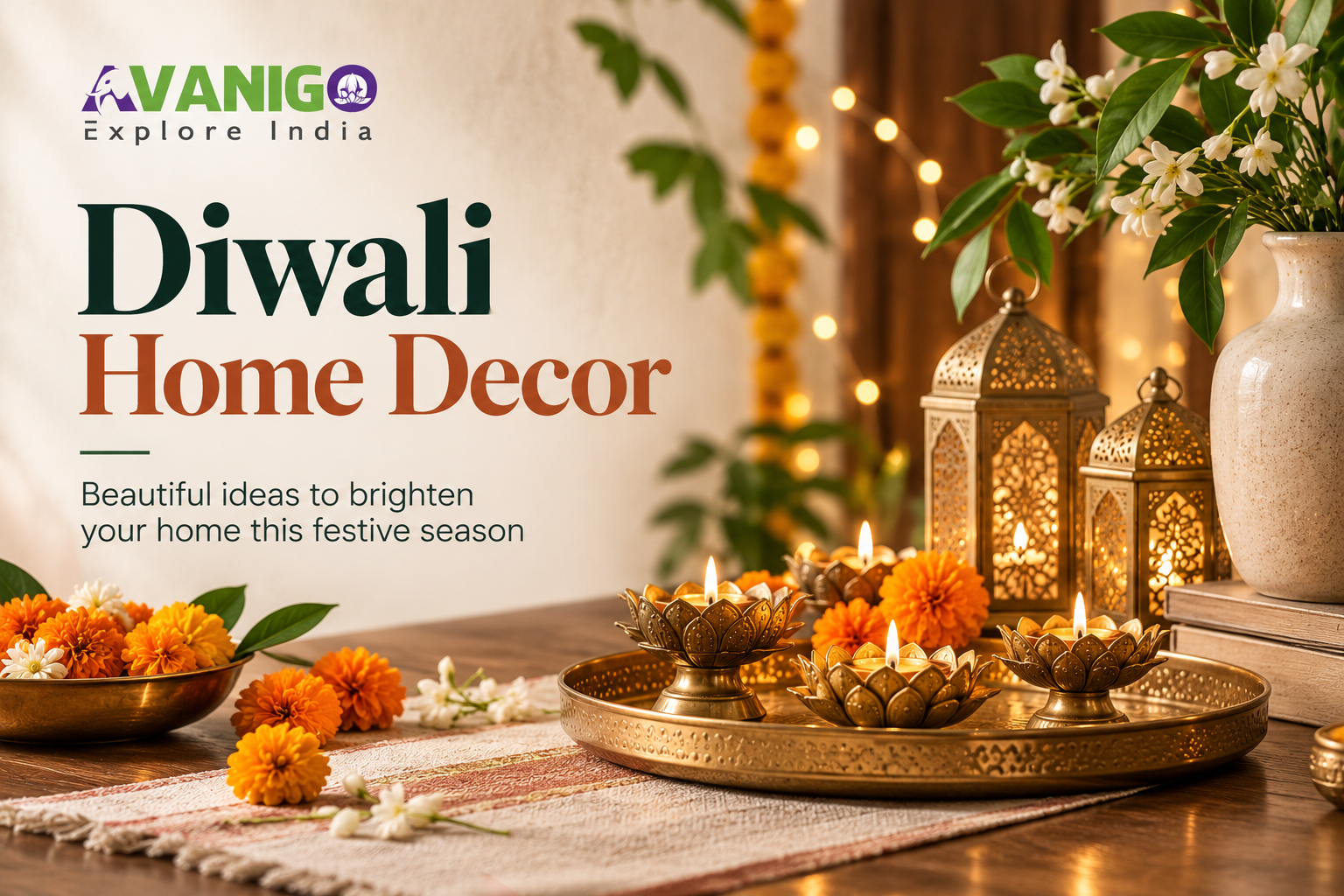
Diwali home decoration does not need an elaborate makeover. A clean entrance, a thoughtfully arranged rangoli, traditional diyas and well-planned lighting can create a festive atmosphere without filling every corner of the house with decorations.
The most effective Diwali décor often combines familiar Indian traditions with practical choices that suit the home. Flowers add colour, lamps create warmth, and traditional objects bring cultural meaning to the celebration. A consistent colour palette and a few carefully chosen details can make the overall arrangement feel considered rather than crowded.
Here are Diwali home decoration ideas that work across apartments, independent houses and different room sizes.

Quick Navigation
Create a Welcoming Diwali Entrance
The entrance sets the tone for the rest of the home. Start by cleaning the doorway and removing unnecessary items from the area. Then add a few festive elements rather than decorating every available surface.
Consider these options:
- Arrange small diyas in a safe, stable area away from curtains and foot traffic.
- Place flower arrangements or garlands around the doorway where they will not obstruct movement.
- Use a traditional toran made from flowers, fabric or reusable decorative materials.
- Add a rangoli near the entrance, leaving enough space for people to walk safely.
- Use a simple decorative tray or traditional brass object as an accent.
For apartment entrances, compact arrangements are often more practical than large displays. Ensure that decorations do not block shared corridors, emergency exits or access for neighbours.
Choose a Rangoli Design That Suits Your Space
Rangoli is one of the most recognisable elements of Diwali decoration. Traditional designs may feature flowers, geometric patterns, diyas, lotus motifs and other symbols associated with celebration and auspiciousness.
The size and complexity of the design should match the available floor space. A small entrance may suit a circular or symmetrical pattern, while a larger courtyard can accommodate a more detailed composition.
You can use coloured powders, flower petals or other materials suitable for your surface. If the floor is polished or slippery, choose materials and placement carefully to avoid creating a hazard.
For more background on the tradition and its cultural significance, read our guide to the history, purpose and importance of rangoli.
Use Diyas for Traditional Lighting
Diyas bring a familiar visual element to Diwali celebrations. Clay lamps are a traditional choice, while metal lamps can be reused across festive occasions.
Arrange lamps in small groups or along a stable, designated surface. Avoid placing open flames near curtains, paper decorations, dried flowers, upholstery or electrical wiring. Keep lamps away from areas where children or pets may knock them over.
If open flames are not practical in your home, LED diyas provide a reusable alternative. They can be used around shelves, window ledges and decorative arrangements where traditional lamps would be difficult to position safely.
The aim is to create a balanced lighting arrangement rather than placing lamps everywhere.
Decorate with Fresh Flowers and Natural Materials
Marigold garlands, loose flower petals and simple floral arrangements can add colour to a festive home. They work particularly well around entrances, puja areas and dining spaces.
You can also use reusable fabric, woven baskets, brass accents and existing household objects to create a traditional look without purchasing an entirely new set of decorations.
A few practical considerations help keep floral décor manageable:
- Choose fresh flowers close to the occasion.
- Keep flowers away from direct heat and open flames.
- Remove wilted flowers before they begin to affect the appearance of the arrangement.
- Avoid excessive plastic wrapping and single-use decorative materials where possible.
Natural materials do not automatically make a decoration sustainable. Reuse, careful purchasing and responsible disposal also matter.
Set Up a Simple Lakshmi Puja Area
For households that observe Lakshmi Puja during Diwali, the puja area may become the central point of the home’s festive arrangement.
Begin by cleaning and organising the space. Use a clean cloth, flowers, a suitable lamp and the puja items required by your family’s tradition. Keep frequently used items accessible and leave sufficient room for those participating in the ritual.
Traditional practices vary by region and family. Follow the customs relevant to your household rather than assuming every family observes the occasion in the same way.
Decorate the surrounding area without overcrowding the space. The arrangement should remain functional for worship, not simply serve as a photographic backdrop.
Plan Diwali Lighting for the Living Room
Lighting can change the atmosphere of a room without requiring new furniture or extensive decoration. Warm-white LED string lights, table lamps and small decorative lights can work well together when placed with restraint.
Choose one or two areas to highlight, such as a window, shelf, balcony door or decorative console. Avoid running too many wires across walking paths, and follow the manufacturer’s instructions for electrical decorations.
If using string lights outdoors, check that the product is rated for the intended environment. Indoor lighting should not be used outside unless the manufacturer specifically permits it.
A consistent lighting tone usually looks more coordinated than mixing several unrelated colours and flashing effects.
Add Small Festive Details to the Dining Area
The dining area often becomes a gathering point during Diwali. A clean table, a simple flower arrangement and coordinated serving pieces can make the space feel festive without interfering with meals.
Consider using:
- A reusable table runner in a festive colour.
- A small flower arrangement positioned away from serving space.
- Traditional serving bowls or metal accents already available at home.
- Reusable cloth napkins.
- A simple arrangement for sweets and snacks.
Keep candles, lamps and electrical decorations away from food, paper packaging and areas where people are serving hot dishes.
Decorate a Small Balcony Without Clutter
A balcony can provide a useful space for festive lighting, especially in apartments. Start by checking the available electrical points and ensuring that any lights are suitable for the location.
Use a small number of lighting elements, a compact plant arrangement or reusable decorative pieces. Keep railings, doors and walking areas clear.
Do not attach lamps or decorations where they could fall into common areas or onto people below. Follow building rules for balcony lighting and avoid anything that creates a fire or electrical risk.
Choose a Practical Colour Palette
A consistent colour palette helps different decorations work together. Traditional combinations include red and gold, yellow and green, or warm white with natural wood and brass tones. These are options rather than rules.
Choose colours based on the décor already in your home. If the room has strong colours and patterned furnishings, a simpler festive arrangement may work better. In a neutral space, flowers, cushions or a rangoli can introduce colour without requiring major changes.
Reusing existing items is often more practical than buying new decorations for a single occasion.
Make Diwali Décor More Reusable
Festive decoration can generate waste when products are purchased for one use and discarded immediately afterwards. A few decisions can reduce unnecessary purchases.
- Store reusable lights, fabric decorations and metal lamps carefully.
- Use flowers or natural materials in quantities you can manage.
- Choose durable decorations instead of buying a new set every year.
- Reuse containers, trays and household objects where appropriate.
- Dispose of broken electrical items and other waste responsibly.
There is no need to replace every decoration with a new product each Diwali. A smaller collection of reusable pieces can make future celebrations easier to organise.
Diwali Decoration Safety Tips
Before arranging your decorations, keep these basic precautions in mind:
- Never leave burning diyas or candles unattended.
- Keep flames away from fabric, paper, dried flowers and electrical wires.
- Place lamps on stable, heat-resistant surfaces.
- Keep matches, lighters and hot lamps out of children’s reach.
- Avoid overloading electrical sockets or using damaged wires.
- Keep exits and shared corridors clear.
- Consider children, older adults and pets when positioning decorations.
A visually attractive arrangement should also be safe for everyone in the household.
Frequently Asked Questions
What are simple Diwali home decoration ideas?
Start with a clean entrance, a small rangoli, a few diyas or LED lamps, fresh flowers and warm lighting. These elements can create a festive atmosphere without requiring extensive shopping.
How can I decorate my home entrance for Diwali?
Use a rangoli, a floral toran and a compact lighting arrangement. Keep the doorway clear and position lamps away from curtains, foot traffic and other flammable materials.
Which lights are suitable for Diwali decoration?
Warm-white LED string lights and decorative LED lamps can suit many indoor arrangements. For balconies or outdoor spaces, choose products rated for the intended environment and follow the manufacturer’s installation instructions.
How can I decorate for Diwali on a budget?
Reuse lights and decorative items from previous years, make a simple rangoli, buy flowers in practical quantities and focus on a few visible areas rather than decorating every room.
How can I make Diwali decorations more eco-friendly?
Prioritise reusable decorations, reduce single-use materials, avoid unnecessary purchases and dispose of waste responsibly. The most practical approach is to buy less and reuse more.
Create a Festive Home That Feels Like Yours
Diwali decoration is most effective when it reflects the household’s traditions, available space and practical needs. Rangoli, diyas, flowers and lighting can create a welcoming setting without excessive decoration or expense.
Choose a few elements that work together, reuse what you already have and keep safety in mind. A considered arrangement can make the home feel festive while leaving the focus on the celebration itself.