
Quick Navigation
Charminar Hyderabad: History, Architecture, Stories and Things to Know
There are monuments you visit for their architecture, and then there are monuments that seem to explain the city around them.
Charminar is the latter.
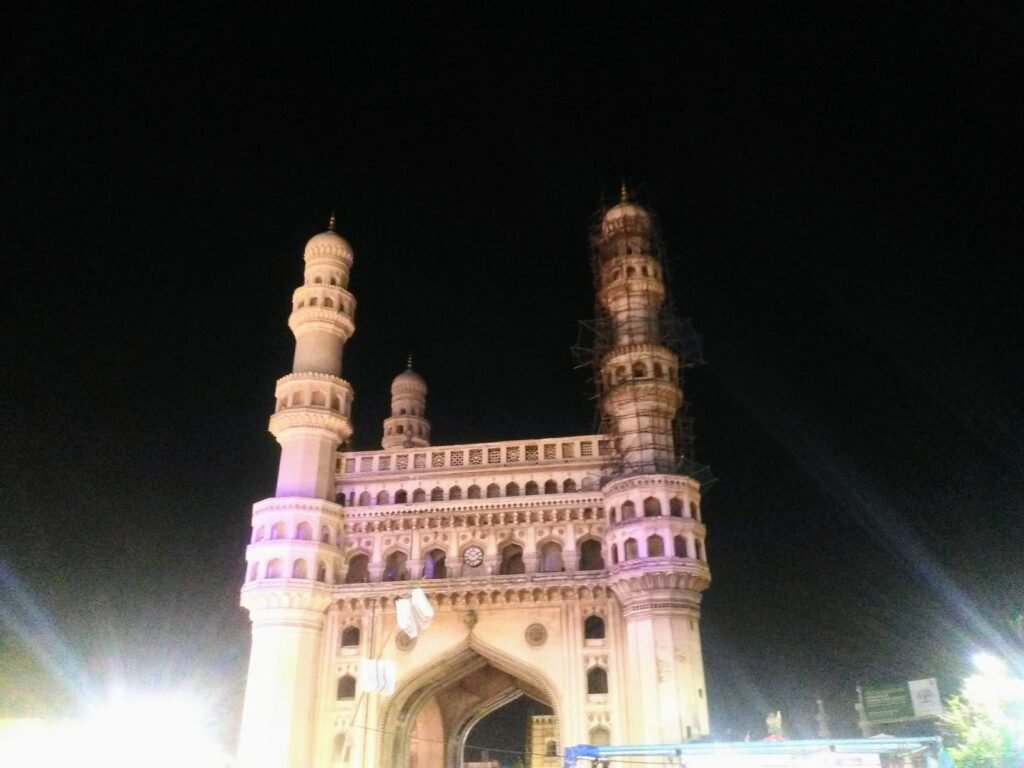
Stand beneath its four great arches and Hyderabad begins to make sense in layers. The monument rises above the movement of the Old City, with its crowded lanes, old shops, perfume sellers, bangles, pearls, Irani cafés and the constant rhythm of people going about their day.
It is easy to photograph Charminar and move on. It is much harder to understand what makes it remarkable.
Built in 1591 by Sultan Muhammad Quli Qutb Shah, Charminar was conceived at the heart of the new city of Hyderabad. It was not simply a monument placed within an existing city. It became a defining point around which the early city was planned. Historical sources describe it as standing at the intersection of four major axes, with its gateways facing the cardinal directions.
More than four centuries later, Charminar remains the visual shorthand for Hyderabad.
What Is Charminar?
Charminar is a historic monument and mosque in the heart of Hyderabad’s Old City in Telangana, India.
The name comes from two words:
Char means four, while minar refers to a tower or minaret.
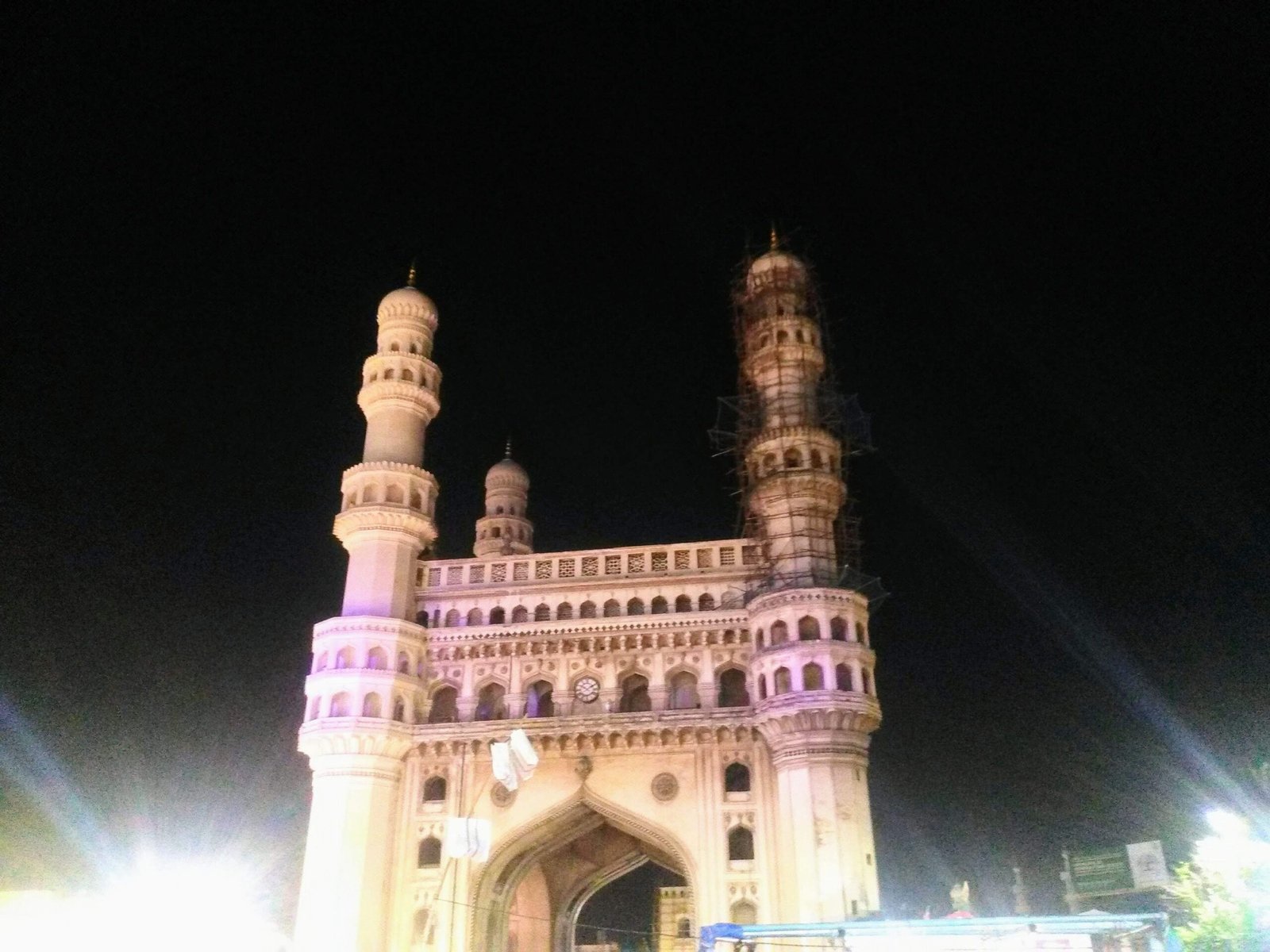
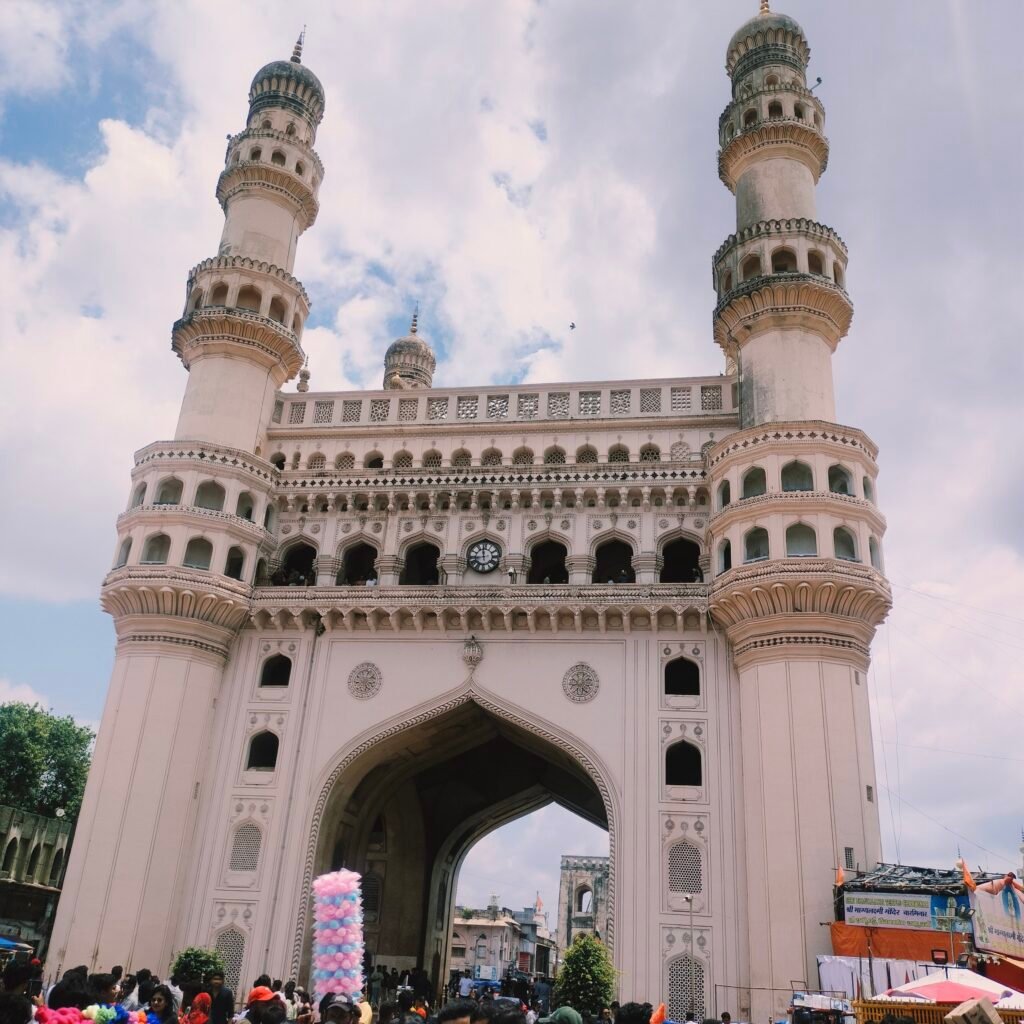
The name is fitting. Four imposing minarets rise from the corners of the square structure, giving Charminar its unmistakable silhouette.
The monument stands at the meeting point of four historic thoroughfares and became an important reference point in the original layout of Hyderabad. UNESCO’s tentative World Heritage documentation describes Charminar as the symbolic centre of the historic city and as the point from which the city’s early planning grid developed.
Today, it is one of the most recognisable landmarks in India.
Who Built Charminar?
Charminar was built by Sultan Muhammad Quli Qutb Shah in 1591.
Muhammad Quli Qutb Shah was the fifth ruler of the Qutb Shahi dynasty and is closely associated with the founding of Hyderabad.
The city was established in 1591, outside the older fortified centre of Golconda, and Charminar formed the central node of the new urban layout.
The monument therefore needs to be understood in the context of the founding of Hyderabad itself.
It was not an isolated architectural experiment. Charminar was part of a larger vision for a new capital.
When Was Charminar Built?
Charminar was constructed in 1591 CE.
The date is significant because contemporary Persian historical sources record the construction of the monument in 1000 AH, corresponding to 1591 CE. UNESCO’s documentation also identifies 1591 as the date of construction.
That makes Charminar more than 430 years old.
Yet its original form remains remarkably legible, allowing visitors to understand the architectural idea behind it even after centuries of urban change.
Why Was Charminar Built?
This is where the story becomes more interesting because there is no single explanation that should be presented as unquestionable fact.
One widely repeated account says that Muhammad Quli Qutb Shah built Charminar to commemorate the end of a devastating plague that had affected Hyderabad. Telangana’s official tourism material also records this tradition.
Another interpretation connects the monument to the establishment of Hyderabad and the beginning of the second Islamic millennium in 1591. UNESCO’s documentation places considerable significance on this date and on the role of Charminar as the central architectural and urban node of the new city.
There are also popular stories connecting Muhammad Quli Qutb Shah with Bhagmati and suggesting that the monument commemorated their relationship. However, this story is better treated as a popular legend rather than established historical fact. Even the Hyderabad district administration notes that the precise reason for constructing Charminar is not entirely clear.
That uncertainty is part of Charminar’s fascination.
Its history has accumulated stories over four centuries, but the monument itself remains the strongest evidence of the ambitions of the Qutb Shahi period.
Charminar Architecture
The first thing you notice about Charminar is its symmetry.
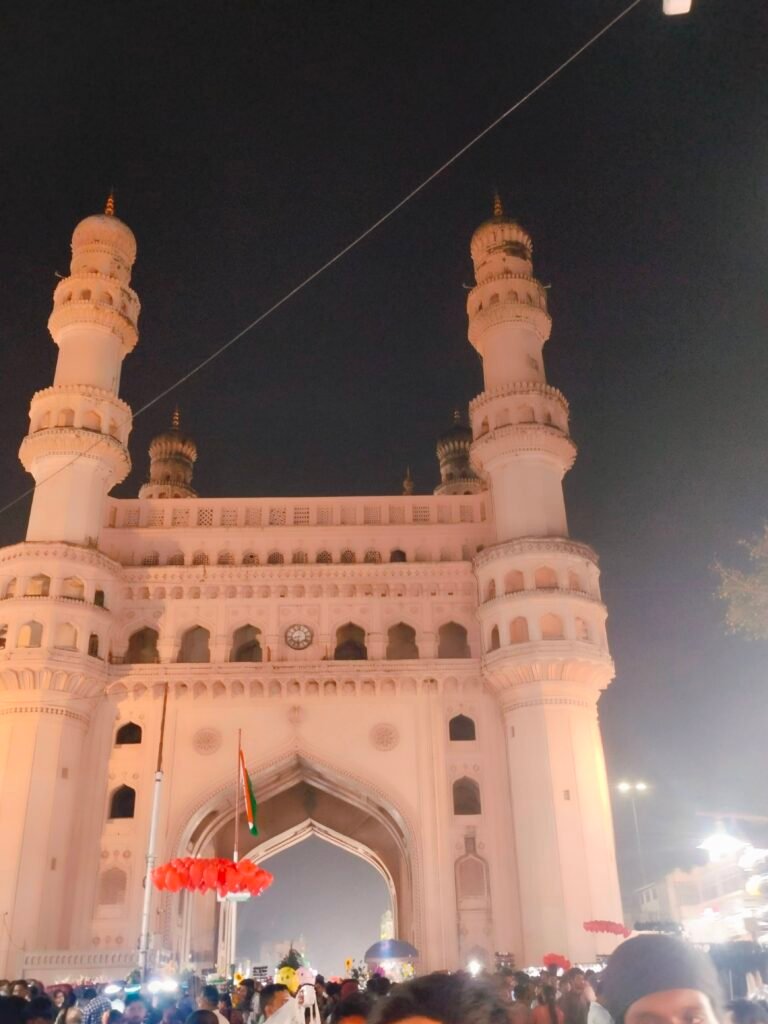
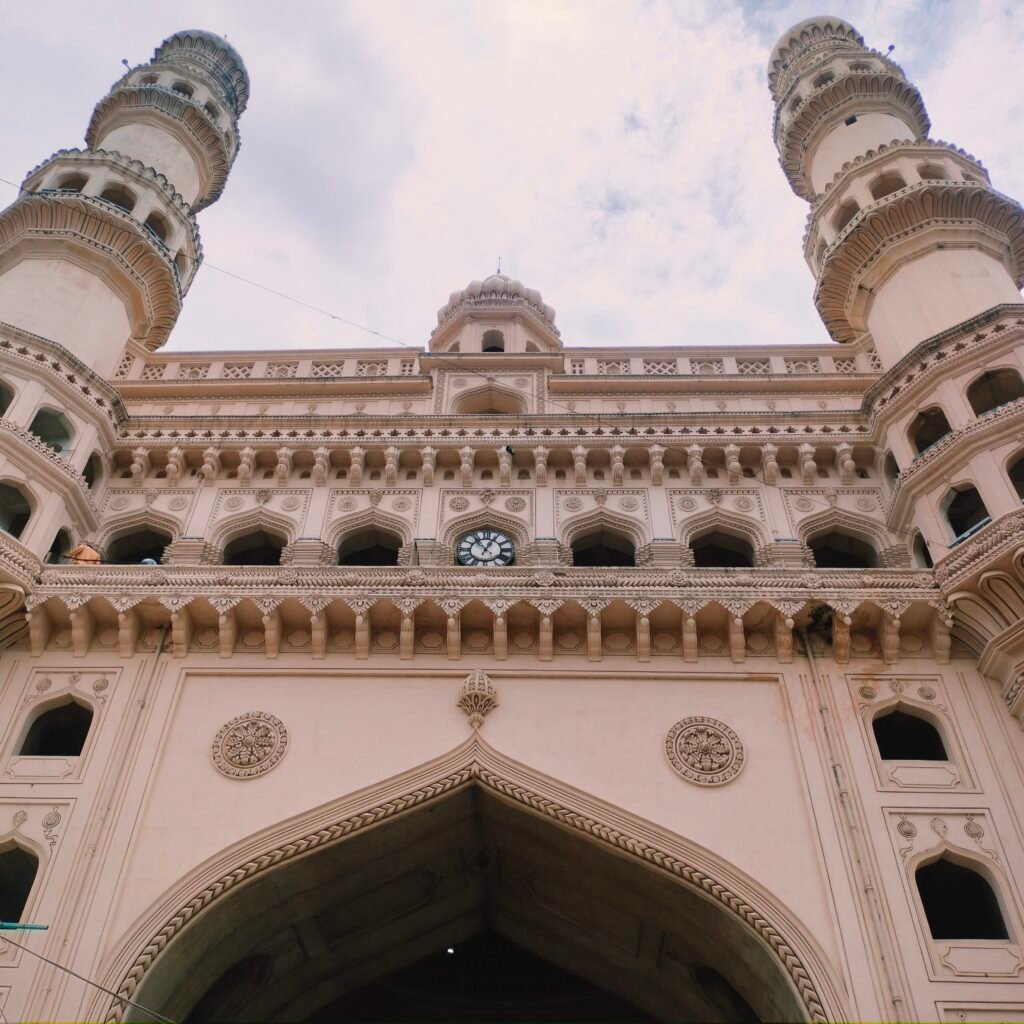
The monument is broadly square in plan, with four grand arches opening towards the four directions. Four minarets rise from its corners, creating the structure that gave the monument its name.
The square structure measures approximately 20 metres on each side, while the minarets rise to around 48.7 metres above ground level, according to Telangana Tourism.
The monument combines architectural influences that are characteristic of the Deccan.
It is commonly described as an example of Indo-Islamic architecture, with Persianate influences alongside decorative elements associated with the architectural traditions of the region. Telangana Tourism specifically notes the combination of Islamic architectural features with intricate stucco floral ornamentation.
The Four Minarets
The four minarets are the defining feature of Charminar.
Each rises from one corner of the monument, creating a balanced vertical rhythm against the broad arches below.
The minarets contain internal staircases. Historical descriptions note 149 circular steps in each minaret.
Their proportions are one reason Charminar remains so visually distinctive even when seen from a distance.
The Arches
The four large arches open towards the four cardinal directions.
They were not merely decorative entrances. Their placement reflects the monument’s relationship with the original urban plan of Hyderabad.
The result is an unusual architectural idea: the monument and the city were designed to work together.
Charminar was simultaneously a building, a landmark and an urban reference point.
Stucco and Floral Ornamentation
Look beyond the arches and minarets and the finer details become visible.
The monument features stucco ornamentation, decorative motifs, balconies, balustrades and arches. Telangana Tourism describes the architectural vocabulary as combining Persian influences with floral ornamentation that also reflects local Hindu architectural traditions.
This mixture is one of the reasons Charminar is so important to the architectural history of the Deccan.
What Is Inside Charminar?
Charminar is not simply an ornamental gateway.
The upper levels contain prayer spaces, and a mosque occupies the western side of the second floor. Historical descriptions also indicate that the first floor was used as a madarasa, or educational institution, during the Qutb Shahi period.
Telangana Tourism records 45 prayer spaces within the monument.
The combination of civic, educational and religious functions makes Charminar particularly interesting. It was part of the life of the city rather than an object designed merely to be admired from outside.
Charminar and the Story of Hyderabad
Perhaps the best way to understand Charminar is to look at what surrounds it.
The Old City radiates outward from the monument through streets that have remained commercially and culturally important for generations.
The area around Charminar includes:
- Laad Bazaar
- Mecca Masjid
- Char Kaman
- Chowmahalla Palace
- Historic markets
- Traditional food shops
- Bangle and jewellery stores
- Old Hyderabad’s street markets
The four historic arches known as Char Kaman were constructed after Charminar during the Qutb Shahi period and formed part of the larger ceremonial urban ensemble. The National Mission on Monuments and Antiquities records their construction after Charminar in 1591.
This is why visiting Charminar should not be reduced to a quick photograph at the monument.
The surrounding neighbourhood is part of the experience.
Laad Bazaar Near Charminar
Walk a short distance from Charminar and the character of the Old City changes again.
Laad Bazaar is famous for its bangles, particularly the colourful lacquer bangles traditionally associated with Hyderabad.
The market is one of the most recognisable commercial spaces around Charminar and remains an important part of the area’s cultural identity.
For a traveller, this is where the monument stops feeling like a historical object and starts feeling like part of a living city.
Mecca Masjid Near Charminar
Another major landmark lies immediately beside Charminar.
Mecca Masjid is one of Hyderabad’s most important historic mosques. Its construction began in 1614 under Sultan Muhammad Qutb Shah and was completed under Aurangzeb in 1693, according to Telangana Tourism.
Its enormous prayer hall, granite construction and monumental arches make it an important stop for anyone interested in the architectural history of Hyderabad.
The mosque and Charminar together give this part of the Old City an extraordinary sense of historical continuity.
Charminar and the Char Kaman
The Char Kaman are four historic arches associated with the Qutb Shahi city.
They were built after Charminar and formed part of the ceremonial and urban composition of the area.
The four arches were positioned around the central area, with Gulzar Houz at the centre of the historic ensemble.
If you are exploring Charminar on foot, these structures are worth noticing rather than treating them as background scenery.
Best Time to Visit Charminar
There are two very different ways to experience Charminar.
Early morning gives you a quieter view of the monument and its surroundings. The light is also gentler, which can be particularly useful if you are photographing architectural details.
Late afternoon and evening reveal another side of the Old City. The surrounding markets become livelier, the monument takes on a different character in the changing light, and the area becomes particularly atmospheric.
If photography is your priority, early morning is generally the more comfortable choice.
If you want to experience Charminar as part of Hyderabad’s living Old City, allow time to explore the surrounding markets and streets as well.
Charminar Timings
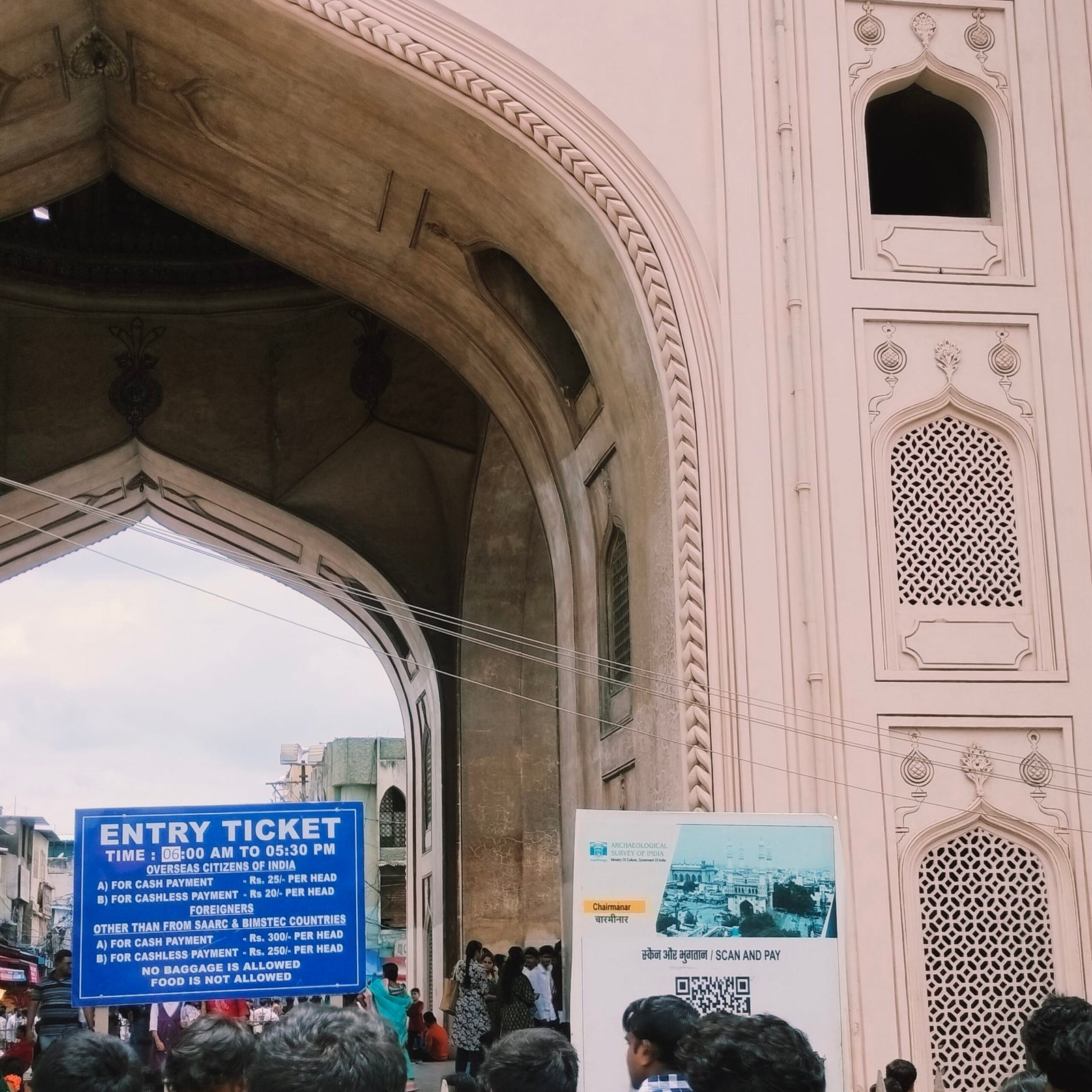
The currently listed visitor timings for Charminar are approximately 9:00 AM to 5:30 PM. Charminar
Timings, entry arrangements and access to particular areas can change, so it is sensible to verify the latest information before planning a dedicated visit.
How to Reach Charminar
Charminar is located in Char Kaman, Ghansi Bazaar, Hyderabad, Telangana 500002, in the heart of the Old City. Charminar
It is well connected to the rest of Hyderabad by road and public transport.
For visitors arriving from other parts of the city, it is useful to remember that the area around Charminar can become extremely busy, particularly during weekends, festivals and peak shopping hours.
If you are driving, plan your visit with traffic and parking constraints in mind.
Places to Visit Near Charminar
A Charminar visit can easily become a half-day heritage walk.
Consider combining it with:
Mecca Masjid
One of Hyderabad’s most important historic mosques, located close to Charminar.
Laad Bazaar
A traditional market known particularly for its bangles.
Char Kaman
Historic ceremonial arches forming part of the Old City’s architectural ensemble.
Chowmahalla Palace
A former royal complex associated with the Nizams and another major heritage landmark in the Old City.
Golconda Fort
A larger historical excursion that takes you further into Hyderabad’s Qutb Shahi past.
Qutb Shahi Tombs
An important group of monuments connected with the Qutb Shahi rulers.
Together, these places tell a much larger story than Charminar alone.
Interesting Facts About Charminar
Here are some Charminar facts worth remembering:
- Charminar was built in 1591.
- It was commissioned by Muhammad Quli Qutb Shah.
- The name Charminar refers to its four minarets.
- The monument stands at the intersection of four major historic axes.
- Its square structure is approximately 20 metres on each side.
- Its minarets rise approximately 48.7 metres above ground level.
- Each minaret contains a circular staircase with 149 steps, according to historical descriptions.
- The monument contains a mosque and prayer spaces.
- Charminar played an important role in the original planning of Hyderabad.
- The monument combines Persianate, Islamic and local Deccani architectural influences.
Why Is Charminar Important?
Charminar matters because it represents several histories at once.
It belongs to the history of the Qutb Shahi dynasty.
It belongs to the history of Hyderabad.
It belongs to the architectural history of the Deccan.
And it remains part of the everyday life of the Old City.
UNESCO’s tentative World Heritage documentation describes Charminar as an architectural masterpiece and highlights its unusual design, its relationship with the city’s four-quartered layout and its importance within the Qutb Shahi urban ensemble.
That is perhaps the most interesting thing about Charminar.
It has survived not by becoming detached from Hyderabad, but by remaining deeply connected to it.
The markets still move around it. People still gather beneath its arches. The streets still lead outward from it. And the city that Muhammad Quli Qutb Shah envisioned in the sixteenth century still recognises Charminar as one of its central symbols.
Frequently Asked Questions About Charminar
Who built Charminar?
Charminar was commissioned by Sultan Muhammad Quli Qutb Shah, the fifth ruler of the Qutb Shahi dynasty, in 1591.
When was Charminar built?
Charminar was built in 1591 CE.
Why is Charminar famous?
Charminar is famous for its four minarets, monumental arches, distinctive Deccani architecture and its central role in the historic planning of Hyderabad.
Why was Charminar built?
The exact reason is not completely certain. A popular historical tradition connects its construction with the end of a plague, while other interpretations connect it with the founding of Hyderabad and the beginning of the second Islamic millennium.
What does Charminar mean?
“Charminar” is derived from words meaning four minarets or four towers.
How tall is Charminar?
The four minarets reach approximately 48.7 metres above ground level, according to Telangana Tourism.
Is there a mosque inside Charminar?
Yes. A mosque occupies part of the upper level of the monument, and the structure also contains prayer spaces.
What is near Charminar?
Major attractions near Charminar include Laad Bazaar, Mecca Masjid, Char Kaman and Chowmahalla Palace.
Charminar: More Than a Monument
The easiest way to remember Charminar is to remember the four arches.
But the better way to understand it is to look beyond them.
Charminar is where architecture becomes urban history. It is where a 16th-century vision for a new city still meets the noise, commerce, faith and everyday life of Hyderabad.
Come for the monument.
Stay for the Old City.
That is where Charminar’s story really begins.